SEO Marketing Glasgow: A Local Guide To Local Search Success
Glasgow presents a compelling landscape for businesses seeking measurable growth through local visibility. The city blends a dense urban core with vibrant neighbourhoods across the West End, Southside, East End, and the North East, each with distinct search behaviours and consumer journeys. This Part 1 introduces a practical mindset for Glasgow-focused SEO marketing, clarifies the signals that matter in a mobile-first, local-first market, and sets the stage for a scalable programme built on our Canonical Local Topic Footprint (CLTF) four-surface momentum model. The guidance here aligns with best practices from leading authorities while keeping a Glasgow-centric lens and a clear path to onboarding via our services on glasgowseo.ai.
What Local SEO Means In A Glasgow Context
Local SEO in Glasgow is not about closing the gap for generic terms; it’s about aligning online signals with how Glaswegians search for services in their neighbourhoods. A robust approach hinges on four surfaces: Web Pages, Knowledge Experiences, Maps-like Panels, and Local Packs. The CLTF spine organises content and signals around Glasgow’s suburb-and-district footprint, ensuring consistency across pages, knowledge assets, service-area mappings, and GBP-driven listings. Central to this is accurate, repeatable data: NAP, GBP presence, local citations, and schema that communicates suburb context to search engines and users alike.
Practical Glasgow-focused signals include a strong NAP approach at the city and suburb level, well-managed Google Business Profile data, strategic local citations, and authentic reviews tied to local experiences. For reference points on foundational SEO concepts, you can consult Google’s SEO Starter Guide and Moz’s What Is SEO, which provide context that complements our CLTF framework. See Google’s SEO Starter Guide and Moz: What Is SEO?.
What This Part Covers
- Glasgow’s local search behaviour: How Glaswegians search, which districts influence intent, and how seasonality impacts demand.
- Four-surface momentum framework: Web Pages, Knowledge Experiences, Maps-like Panels, Local Packs, and how CLTF organises signals around Glasgow’s districts.
- Core signals for Glasgow: NAP consistency, Google Business Profile (GBP) optimisation, local citations, reviews, and schema where appropriate.
- Practical next steps: A starter blueprint for a Glasgow-focused CLTF spine, governance artefacts, and how to begin with a minimal viable programme on glasgowseo.ai/services.
The Glasgow Local SEO Advantage
Glasgow’s mix of central districts and thriving suburban pockets means momentum comes from disciplined signal governance as much as aggressive content. A Glasgow-focused CLTF spine helps you surface the right services to the right people, at the right time, in the right district. Governance around signal provenance, including TL notes, LF depth (neighbourhood texture), and CDS trails, is essential for auditability as the market evolves. For practical foundations, reference Google’s guidance and reputable SEO primers to anchor your Glasgow plan while we tailor it to local realities on glasgowseo.ai/services and provide onboarding through the contact page.
Scope Of This Series: What To Expect In Part 1
This opening section establishes the Glasgow context, the CLTF four-surface momentum framework, and how four surfaces work together to deliver durable local visibility. In subsequent parts, we translate this foundation into concrete steps for on-page optimisation, technical health, GBP governance, local citations, reviews, and a practical measurement plan. For templates, governance artefacts, and onboarding resources tailored to Glasgow, explore our services hub and begin onboarding via the contact page.
What You’ll Take Away From Part 1
- A clear mental model for approaching Glasgow SEO marketing with a district-aware, four-surface momentum.
- An early, suburb-focused CLTF spine that guides content planning and signal allocation.
- Governance artefacts that support auditable growth and regulator-friendly reporting.
- A practical pathway to kickstart a Glasgow programme via our services hub and onboarding routes.
As you begin implementing seo marketing glasgow, focus on steady, auditable progress across signals and surfaces. Glasgow rewards local relevance, reliable business data, and timely content that answers district-specific needs. For ongoing guidance, revisit each part of this series and combine insights with practical templates from our services hub and onboarding pages. For credible sources, consult Google’s guidance and Moz’s primer on what SEO is, and consider subscribing to updates via our services hub or the contact page for a personalised Glasgow plan.
Understanding The Glasgow Local Search Landscape
Glasgow presents a dynamic local search environment where district-level intent and reliable business data drive measurable visibility. This Part 2 expands on the Canonical Local Topic Footprint (CLTF) four-surface momentum model introduced in Part 1, translating it into a Glasgow-ready understanding of how users search, how competition behaves, and how signals should be governed at scale. The goal is to align web pages, knowledge experiences, maps-like panels, and local packs with Glasgow's neighbourhoods, while providing a practical onboarding path via glasgowseo.ai/services and friendly access to our onboarding team through the contact page.
Glasgow Search Behaviour And Competition
In Glasgow, search activity is tightly tied to district identity. Users often begin with a location qualifier such as a neighbourhood or suburb and then narrow by service type, availability, and timing. This pattern reinforces the CLTF approach: build a four-surface spine that mirrors where intent originates and how it travels through the ecosystem. Web Pages host district-focused service pages, Knowledge Experiences present practical guides and local insights, Maps-like Panels surface directions and service-area details, and Local Packs showcase GBP signals and customer feedback. For guidance on the underlying concepts, consult Google's formal resources and established primers, while applying them through Glasgow-focused templates in glasgowseo.ai/services.
Core signals to prioritise in Glasgow include NAP consistency at city and suburb levels, well-managed Google Business Profile data, authentic local citations, and schema that communicates suburb context. Regular review and updates around GBP, citations, and reviews help sustain visibility across surfaces as the market shifts. See Google’s local guidance and Moz’s SEO primer to anchor your localisation strategy: Google's SEO Starter Guide and Moz: What Is SEO?.
Seasonality And Suburb Dynamics
Glasgow’s demand cycles are strongly influenced by district activities, university calendars, and city events. For example, visitor traffic around the West End and city centre fluctuates with festivals, football matches, and student schedules. A Glasgow strategy should map these rhythms into content calendars, GBP updates, and review activity that reflects local flavours. By coordinating content around district-specific peak times and low seasons, you maintain momentum while keeping signals coherent across surfaces.
Suburb dynamics also evolve as new developments emerge. Growth pockets in the North East or Southside bring fresh search terms and new service-area considerations. Track demand shifts by district, validate with local feedback, and adjust the CLTF spine to preserve signal provenance as the market evolves. For practical templates and onboarding routes, explore our services hub and initiate contact through the contact page.
Applying CLTF To Glasgow
Canonical Local Topic Footprint translates Glasgow’s signals into a scalable content and signal architecture. For each district, you anchor a four-surface spine and then build supporting content that amplifies local intent: Web Pages that answer district-specific questions, Knowledge Experiences that present useful local guidance, Maps-like Panels that surface directions and service-area details, and Local Packs that showcase GBP signals and reliability indicators. Landing pages should be action-oriented, with clear calls to schedule, directions, or quotes, and should integrate with local knowledge assets and GBP data for coherence across surfaces.
Governance matters as much as momentum. Maintain signal provenance records, versioned content, and audits that demonstrate how signals move through the four surfaces. For Glasgow-specific templates and onboarding resources, visit our Glasgow hub and begin onboarding via the contact page.
What You’ll Learn In This Part
- How Glasgow’s district-oriented search intent guides surface selection and content planning.
- How to build a Glasgow-specific CLTF spine that scales from a single district to a broader footprint.
- Practical governance artefacts that keep signals auditable and compliant with local expectations.
- Methods to measure and sustain momentum across Web Pages, Knowledge Experiences, Maps-like Panels, and Local Packs.
As you continue building seo marketing glasgow, maintain a district-aware, governance-forward approach. The Glasgow market rewards precise localisation, consistent business data, and content that responds to district-specific needs. Use the resources in our services hub to accelerate onboarding and implementation, and contact us to tailor a Glasgow plan that aligns with your business outcomes. For credible sources, consult Google’s local guidelines and Moz’s What Is SEO? as foundational references: Google's SEO Starter Guide and Moz: What Is SEO?.
Setting Clear Goals And KPIs For Glasgow SEO
With the Canonical Local Topic Footprint (CLTF) and four-surface momentum guiding Glasgow-focused optimisation, establishing concrete goals and auditable KPIs is essential to translate activity into measurable business impact. This Part 3 outlines a practical framework for setting district-aware targets, selecting meaningful metrics, and structuring regulator-friendly reporting. The aim is to ensure every Glasgow suburb contributes to Web Pages, Knowledge Experiences, Maps-like Panels, and Local Packs in a balanced, trackable way. Access to our Glasgow onboarding resources via glasgowseo.ai/services helps translate these targets into action with governance artefacts aligned to local realities via the contact page.
Glasgow Objectives Framework
Objectives in Glasgow should be specific to district dynamics and tied to four-surface momentum. The CLTF spine ensures every suburb anchors a Web Page, a Knowledge Experience, a Maps-like Panel entry, and a Local Pack signal, creating a coherent signal journey from discovery to action. A robust framework requires TL notes that justify locale relevance, LF depth that captures neighbourhood texture, and CDS trails that map signal lineage. This structure supports auditable growth and regulator-friendly reporting as Glasgow’s suburbs evolve.
For practical grounding, reference established resources such as Google’s local guidance and Moz’s What Is SEO? while applying them through Glasgow-focused templates in glasgowseo.ai/services and onboarding via the contact page.
Core KPIs By Surface In Glasgow
Think of four-surface momentum as a balanced scorecard for Glasgow. Each surface offers a distinct lens on performance, and together they reveal how signals translate into real-world actions in the city’s districts. Use per-suburb dashboards to compare momentum across surfaces and to attribute outcomes to the most impactful signals.
- Web Pages Momentum: Sessions, unique pageviews, average session duration, bounce rate, scroll depth, and on-page conversions (quotes, inquiries, or bookings). Aim for steady uplift as coverage expands across Glasgow suburbs.
- Knowledge Experiences: Engagement depth, downloads, time-on-page, scroll depth, and completion rates for district guides or FAQs tied to Glasgow topics.
- Maps-like Panels: Directions requests, clicks-to-call, store page visits, and proximity-driven interactions that demonstrate local intent and service-area relevance.
- Local Packs And GBP Signals: Impressions, clicks, calls, directions, reviews, and suburb-level signal strength. Track GBP health in parallel with suburb momentum.
Measurement Cadence And Governance In Glasgow
Establish a disciplined cadence that makes momentum auditable and regulator-friendly. Monthly dashboards for Glasgow should slice data by suburb and surface, with a quarterly governance review to validate signal provenance, TL notes, LF depth, and CDS trails attached to major assets. Align reporting with business objectives, demonstrating how four-surface signals contribute to inquiries, bookings, and revenue in Glasgow’s diverse districts.
Before publishing new assets, implement WhatIf Momentum checks to safeguard signal balance, and allow a 30–60 day post-publish validation window to compare observed momentum against projections. Governance templates and onboarding resources are available via the Glasgow hub and the contact page for a tailored plan.
Aligning Glasgow Goals With Business Outcomes
Every Glasgow objective should map to concrete business outcomes. Tie goals to four-surface momentum to ensure that district-specific signals, GBP activity, and local-content efforts translate into tangible inquiries, directions, quotes, or bookings. Use the CLTF framework as the organising backbone for content planning, technical health, GBP governance, and local citations. For practical templates, governance artefacts, and onboarding steps tailored to Glasgow, explore glasgowseo.ai/services and begin onboarding via the contact page.
What You’ll Take Away From This Part
- A district-aware goals framework that ties Glasgow suburb signals to CLTF four-surface momentum.
- A clear KPI map by surface and suburb, enabling auditable momentum and regulator-friendly reporting.
- Governance artefacts that support durable local authority signals and cross-surface consistency.
- A practical pathway to begin Glasgow-focused optimisation via our services hub and onboarding routes.
Geotargeted Keyword Research For Glasgow
Geotargeted keyword research sits at the heart of four-surface momentum for Glasgow. Building on the Canonical Local Topic Footprint (CLTF) framework, this part translates local search intent into district-aware keyword sets that power Web Pages, Knowledge Experiences, Maps-like Panels, and Local Packs. By identifying Glasgow-specific terms, neighbourhood qualifiers, and proximity-driven variants, you create a scalable map from discovery to conversion that respects the city’s unique geography and consumer patterns. Access practical templates and onboarding routes via glasgowseo.ai/services and start onboarding through the contact page to tailor a Glasgow-centric plan.
Why Geotargeted Keywords Matter In Glasgow
In Glasgow, users frequently search with district qualifiers, transport links, and local landmarks. Terms like "Glasgow City Centre electrician" or "Plumber Glasgow West End" capture intent more precisely than generic city-wide terms. By pairing city-wide service terms with suburb qualifiers, you strengthen proximity signals across all CLTF surfaces. Google’s local guidelines and foundational SEO primers emphasise relevance, context, and accuracy—principles we apply through Glasgow-focused keyword taxonomies aligned to the four surfaces. See Google’s SEO Starter Guide and Moz: What Is SEO? for foundational context.
Geotargeting Methodology For Glasgow
This approach blends city-wide terms with suburb qualifiers, local landmarks, and district-specific service intents. Start with a Glasgow keyword inventory using trusted tools (official or widely recognised sources) and expand through local phrase discovery. Build clusters around key Glasgow districts such as City Centre, West End, Southside, East End, and North Glasgow, then refine with proximity modifiers like street names or transit routes. Reference data sources such as Google Trends and keyword research platforms to prioritise terms with demonstrable local demand. For practical reference, consult Google’s guidelines and Moz’s keyword research frameworks as you structure your Glasgow taxonomy.
- City-level base terms: Glasgow electrician, Glasgow plumber, Glasgow locksmith.
- District qualifiers: City Centre Glasgow, West End Glasgow, Southside Glasgow, East End Glasgow.
- Local landmarks and transport anchors: Kelvinhall, Glasgow Green, Subway stations, Great Western Road, Byres Road.
Mapping Keywords To The CLTF Four Surfaces
Web Pages: Create district-focused landing pages that pair core services with Glasgow suburbs, e.g., Glasgow City Centre Electricians. Knowledge Experiences: Produce practical local guides and FAQs that answer region-specific questions, like permitted working hours in different districts. Maps-like Panels: Surface proximity-led content such as directions and service-area visuals tied to suburb names. Local Packs: Align GBP signals with suburb-specific terms to improve near-me visibility and drive calls and directions. This mapping ensures a coherent signal journey from discovery to action across Glasgow’s district footprint.
Practical Keyword Clusters By Suburb
Some starter clusters to seed Glasgow campaigns include:
- City Centre Clusters: Glasgow City Centre electrician, City Centre plumber Glasgow, Glasgow central heating repair Glasgow.
- West End Clusters: Glasgow West End boiler service, West End emergency plumber, Kelvingrove Park electrician Glasgow.
- Southside Clusters: Southside gas engineer Glasgow, Shawlands electrician, Pollokshields boiler service.
- East End Clusters: Glasgow East End locksmith, Whiteinch gas safe engineer, Bridgeton boiler service Glasgow.
- North Glasgow Clusters: North Glasgow cooling technician, Maryhill electrician, Springburn plumber Glasgow.
Each cluster should map to four surfaces with TL notes (locale relevance), LF depth (neighbourhood texture), and CDS trails (signal lineage) attached to major assets to support audits and governance. For practical templates, explore the Glasgow hub and onboarding through the contact page.
Geotargeted Keyword Research Workflow
1) Discover local intent signals by suburb using city-wide baseline terms and district modifiers. 2) Cluster keywords by surface alignment and district relevance. 3) Validate volume and intent using trend data and competitive analysis. 4) Build CLTF-aligned content plans that weave suburb terms into Web Pages, Knowledge Experiences, Maps-like content, and Local Packs. 5) Attach governance artefacts to major assets to maintain auditability as Glasgow’s suburbs evolve.
Governance And Measurement Essentials
Maintain TL notes to justify locale relevance, LF depth to capture neighbourhood texture, and CDS trails to map signal progression. Use per-suburb keyword mappings in your CLTF spine and update dashboards to reflect surface-level momentum by district. WhatIf Momentum pre-publish checks help ensure that new keyword targets align with the four-surface framework before going live. Onboard with Glasgow templates via the Glasgow hub and contact page for a bespoke plan.
Examples And Next Steps
Apply the clusters to a real Glasgow schedule: start with 4–6 core suburbs, then expand as momentum proves durable. Create example pages like Glasgow City Centre Electricians, Maryhill Boiler Service Glasgow, and a Knowledge Experience on local regulations for trades in Glasgow. Connect each asset with CLTF surfaces and ensure schema coverage and GBP alignment. To accelerate, access Glasgow templates at glasgowseo.ai/services and contact via the contact page.
Measuring Success And Readiness For Scale
Success emerges when geotargeted keywords translate into district-specific momentum across four surfaces, with auditable governance artefacts supporting regulator-friendly reporting. Track per-suburb search visibility, GBP interactions, and on-site engagement across Web Pages, Knowledge Experiences, Maps-like Panels, and Local Packs. Regularly review TL notes, LF depth, and CDS trails to maintain signal provenance as Glasgow expands. For templates and onboarding resources, visit the Glasgow hub and start onboarding via the contact page.
Read next: SEO Glasgow: dominating local search · Glasgow SEO company: local search
Internal And External References
For foundational guidance, refer to Google’s SEO Starter Guide and Moz’s What Is SEO?; for localisation signals and local content strategy, consult trusted resources and adapt them to Glasgow’s district context. Example resources include Google Starter Guide and Moz: What Is SEO?, alongside our Glasgow templates and onboarding routes at glasgowseo.ai/services and the contact page.
What You’ll Take Away From Part 4
- A robust geotargeted keyword framework tailored to Glasgow’s districts and suburbs.
- A clear mapping of keyword clusters to the four CLTF surfaces to sustain momentum.
- Governance artefacts that support auditable, regulator-friendly reporting and scalable growth.
- A practical path to onboarding via the Glasgow hub to accelerate implementation and measurement.
Next Steps: Getting Started In Glasgow
Begin with a baseline Glasgow keyword inventory, attach TL notes, and establish suburb-focused dashboards. Use the CLTF four-surface framework to prioritise content ideas, and plan a staged rollout across district pages, knowledge assets, maps-like content, and GBP signals. For ready-made templates and onboarding support, explore glasgowseo.ai/services and contact via the contact page.
On-Page Optimisation For Glasgow Queries
On-page optimisation remains the engine that translates Glasgow-focused four-surface momentum into practical signals for both users and search engines. Building on the Canonical Local Topic Footprint (CLTF) framework, this Part focuses on suburb-aware, page-level optimisations that reinforce Web Pages, Knowledge Experiences, Maps-like Panels, and Local Packs across Glasgow’s districts. The aim is to deliver content that resonates with Glaswegians in places like the City Centre, West End, Southside, East End, and North Glasgow, while maintaining strong signal provenance for audits and scalable growth. Access practical templates and onboarding resources at glasgowseo.ai/services and begin onboarding via the contact page to tailor a Glasgow-centric plan.
Meta Titles And Descriptions For Glasgow Suburbs
Meta elements should clearly signal local intent by pairing Glasgow-wide service terms with district qualifiers. For example, "Glasgow City Centre Electricians" or "West End Plumbers Glasgow" convey proximity and relevance that matter to Glaswegians on mobile and desktop alike. Keep titles concise (roughly 50–60 characters) and descriptions informative (around 150–160 characters) to communicate the suburb, service, and a tangible benefit. Align with Google’s metadata guidance and Moz’s SEO primer, but tailor templates to Glasgow’s four-surface spine: Web Pages, Knowledge Experiences, Maps-like Panels, and Local Packs. See Google: Meta Tags Guidelines and Moz: What Is SEO? for context.
- Incorporate suburb names early in the title to strengthen locality signals.
- Include a clear service descriptor and a local CTA to boost click-through and relevance.
Headers And Content Structure For Glasgow Suburbs
Headers should guide Glaswegians through district-specific questions and actions while making the CLTF four-surface signal pathways explicit. Use an H1 that includes the suburb and service, and structure H2s around local intents such as: Glasgow West End Electricians, Best Plumbers In Glasgow East End, or City Centre Security System Installation Glasgow. Each header should map to one of the four surfaces: a Web Page answering a local query, a Knowledge Experience offering practical local insights, a Maps-like Panel surfacing directions and service-area details, or a Local Pack signal via GBP data and reviews. Avoid keyword stuffing; prioritise clarity, user intent, and accessible schema that supports surface appearances.
Practical tip: keep content concise where possible, but always tie each section back to a concrete local action (quote, directions, booking) and ensure that TL notes (local rationale), LF depth (neighbourhood texture), and CDS trails (signal provenance) accompany major assets for audits.
Local Landing Pages And Cross-Surface Consistency
For Glasgow, every suburb should have a landing page that coherently draws signals from the four surfaces. Web Pages host district-focused service information and local CTAs; Knowledge Experiences provide practical local guides and FAQs; Maps-like Panels surface proximity, directions, and service-area visuals; Local Packs reflect GBP signals and suburb-specific reviews. Interlinking between these surfaces must feel natural and contextually relevant, ensuring a smooth journey from discovery to conversion. Maintain a central index mapping each Glasgow suburb to its four-surface assets and governance artefacts, so audits remain straightforward as the city evolves.
Schema And Local Signals For Glasgow Suburbs
Structured data acts as the semantic framework that connects CLTF signals to Glasgow suburb contexts. Apply LocalBusiness or Service markup to core assets, and include AreaServed with suburb names to communicate reach. Use FAQPage markup for suburb-specific questions and consider GeoCoordinates to reinforce district proximity. Validate JSON-LD with Google’s testing tools and ensure alignment with TL notes and CDS trails to maintain governance auditability across four surfaces. Reflect local nuances in page copy, meta data, and schema to support suburb-level visibility throughout Glasgow.
Practical On-Page Template For Glasgow Suburbs
Adopt a repeatable, district-aware page template that aligns with CLTF four-surface momentum. A typical Glasgow suburb page structure could include:
- Suburb-focused H1: includes the suburb name and service, e.g., Glasgow West End Electrical Services.
- Local Meta: concise meta title and description featuring the suburb and service, with a strong local CTA.
- Hero Section: a district-relevant value proposition and a primary action (quote, directions, or booking).
- Local Signals Block: district-specific benefits, case notes, and a snippet of a local FAQ.
- Knowledge Block: a short guide or FAQ addressing common Glasgow-area questions.
- Cross-Surface Links: connect to a related Web Page, a Knowledge Experience, and GBP content when relevant.
- Schema And Local Signals: implement LocalBusiness or Service markup, plus FAQPage where appropriate to support surface appearances.
Templates and onboarding resources to implement this approach are available in our Glasgow hub at glasgowseo.ai/services and onboarding via the contact page.
Local SEO Optimisation For Glasgow
Local SEO in Glasgow hinges on harmonising Google Business Profile (GBP) signals, consistent NAP data, trusted local citations, and authentic reviews within a suburb-aware Canonical Local Topic Footprint (CLTF) spine. Building on the four-surface momentum model, this Part 6 delivers practical, Glasgow-specific optimisation tactics that scale across City Centre, West End, Southside, East End, and the North Glasgow corridors. The aim is to ensure Web Pages, Knowledge Experiences, Maps-like Panels, and Local Packs all reflect the local context and translate into tangible actions for Glaswegians. Onboard quickly via glasgowseo.ai/services and connect with our team through the contact page to tailor a Glasgow-focused plan.
Google Business Profile Governance In Glasgow
The GBP is the doorstep to local visibility in Glasgow. Prioritise complete business profiles with accurate categories, explicitly defined service areas, and suburb-specific highlights. Regular GBP activity should reflect the city’s diverse districts, ensuring that Glasgow-based searches associate with your nearest location. Maintain a cadence of GBP posts that showcase timely offers or local events, and actively manage Q&A to surface when Glaswegians ask about services in particular districts. Regularly monitoring GBP insights helps you identify which suburbs drive engagement and which service lines are most visible. For formal guidance, review GBP Help and translate those best practices into Glasgow-tailored templates via glasgowseo.ai/services. See also Google's beginner resources at GBP Help.
NAP Consistency And Local Citations Across Glasgow
Consistency of name, address, and phone (NAP) across Glasgow-centric directories underpins trustworthy local signals. Create a centralised citation ledger that lists core Glasgow suburbs (e.g., City Centre, West End, Maryhill, Partick, Shields). Ensure each listing uses the exact NAP format and maps service areas to the corresponding suburb landing pages. Prioritise high-quality, locally relevant directories and industry-specific citations. Regularly audit for duplicates, outdated details, and misformatted addresses, and coordinate updates with your CLTF four-surface spine to preserve signal provenance across Web Pages, Knowledge Experiences, Maps-like Panels, and Local Packs. For foundational guidance, reference Google’s local signals guidance and reputable primers, then implement Glasgow-specific templates in glasgowseo.ai/services and onboard via the contact page.
Reviews And Reputation Management In Glasgow
Local Glaswegians respond to responsive, authentic experiences. Build a systematic review programme: request feedback after service delivery, respond promptly and professionally, and showcase local case notes in Knowledge Experiences or suburb pages. Encourage reviews that reference district context (e.g., a specific neighbourhood or transport link) to strengthen proximity signals across surfaces. Avoid incentivising reviews, maintain transparency, and use constructive feedback to refine CLTF content and local signals. Align review activity with GBP data and suburb landing pages to boost proximity signals. For credible, governance-aligned playbooks, explore our Glasgow templates via glasgowseo.ai/services and start onboarding through the contact page.
Schema And Local Signals For Glasgow Suburbs
Structured data acts as the semantic language that links CLTF signals to Glasgow suburb contexts. Apply LocalBusiness or Service markup to core assets, and include AreaServed with suburb names to communicate reach. Use FAQPage markup for suburb-specific questions and consider GeoCoordinates to reinforce district proximity. Validate JSON-LD with Google's testing tools and ensure alignment with TL notes and CDS trails to maintain governance auditability across four surfaces. Reflect local nuances in page copy, meta data, and schema to support suburb-level visibility in Glasgow.
Practical Next Steps For Glasgow Local SEO
1) Audit GBP completeness, GBP signals, and suburb-specific posts to surface Glasgow momentum. 2) Create and populate suburb landing pages with CLTF-aligned content and proper schema. 3) Build a central NAP and citation governance process across Glasgow directories. 4) Establish per-suburb review campaigns and responsive reputation management. 5) Validate signals with regular audits and governance artefacts (TL notes, LF depth, CDS trails) to ensure regulator-friendly reporting as Glasgow evolves.
Templates and onboarding resources are available in our Glasgow services hub at glasgowseo.ai/services. To begin implementing or to discuss a tailored Glasgow plan, contact us via the contact page.
Reputation Management and Reviews in Glasgow
In Glasgow, trust is built not only through the accuracy of your business data but through the authentic voice of customers. Reputation management sits at the intersection of four-surface momentum, reinforcing Web Pages, Knowledge Experiences, Maps-like Panels, and Local Packs with real-world feedback from Glaswegians. This Part 7 focuses on practical strategies for acquiring reviews, monitoring sentiment, responding effectively, and weaving testimonials into district-focused content that strengthens locality signals across Glasgow's neighbourhoods.
Why Reviews Matter In Glasgow Local SEO
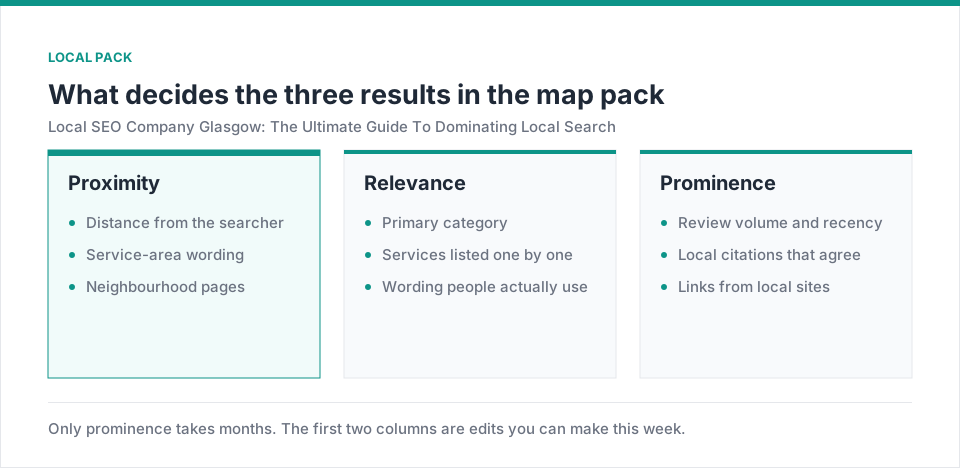
Reviews act as qualitative proof of local service quality, bolstering confidence for nearby customers and signalling to search engines that your business delivers value in specific districts. The CLTF four-surface momentum model thrives when reviews are tied to suburb-level context, ensuring that Web Pages, Knowledge Experiences, Maps-like Panels, and GBP signals reflect real Glaswegian experiences in City Centre, West End, Southside, East End, and North Glasgow. This alignment supports both user experience and search engine understanding, helping you appear in Local Packs and near-me results where it matters most.
Consult authoritative guidance on evaluating and collecting reviews—for example, Google’s guidance on reviews and reputation signals, and Moz’s primer on SEO basics—to ground your Glasgow strategy in established best practices while tailoring them to local realities. See Google's SEO Starter Guide and Moz: What Is SEO?.
Review Acquisition Playbook For Glasgow
Adopt a district-aware review programme that captures feedback across key Glasgow suburbs. Use a mix of in-person requests, post-service follow-ups, and digital prompts that reference district context (e.g., City Centre, West End, Maryhill). Prioritise timely requests after a successful service interaction and provide easy-to-use review channels. Where possible, guide customers to leave reviews on GBP, but also capture sentiment on local directories and community platforms that Glaswegians trust. Avoid incentives that distort authenticity and focus on asking for constructive feedback that informs continuous CLTF improvements.
- Timing Is Critical: Request reviews within 24–72 hours of service when satisfaction is fresh.
- District-Specific Prompts: Tailor prompts to the customer’s suburb to strengthen locality signals.
- Multi-Channel Distribution: Collect reviews across GBP, local directories, and niche community sites to diversify signals.
Response Framework: Turning Feedback Into Trust
How you respond to reviews matters as much as the reviews themselves. Implement a standard response framework that acknowledges the issue, outlines corrective actions, and communicates a local commitment to improvement. For positive reviews, thank customers and highlight district-specific highlights or follow-up offers. For negative feedback, respond promptly, avoid defensiveness, and reference concrete remedies or future steps. Tie responses to Knowledge Experiences and local landing pages when relevant to demonstrate a coherent, district-aware growth narrative. This practice enhances GBP interactions and strengthens cross-surface signals.
Governance, Sentiment Monitoring, And The Four Surfaces
Maintain continuous sentiment monitoring to spot trends by suburb. Deploy lightweight sentiment analysis across new reviews and surface-level indicators (e.g., frequency of mentions of a district, service type, or common pain points). Attach TL notes (local rationale) to reviews and related assets, document LF depth (neighbourhood texture) in knowledge assets, and ensure CDS trails (signal lineage) show how feedback informs updates across Web Pages, Knowledge Experiences, Maps-like Panels, and Local Packs. Regular governance reviews help ensure that reviews contribute to auditable momentum rather than introducing skew or noise into the signal mix.
Case Studies And Practical Examples
Consider two illustrative scenarios where local reviews shape Glasgow momentum:
- City Centre Electricians: A surge of positive district-focused feedback leads to updated landing pages and a new knowledge asset detailing emergency electrician services in City Centre, reinforcing Local Pack signals and GBP authority in the area.
- West End Plumbers: Consistent, context-rich reviews from Maryhill residents are used to craft a Knowledge Experience about water heater maintenance in West End, aligning content with district-specific service needs and improving dwell time on local pages.
Image-Driven Visuals And How They Tie In
Visuals accompanying reviews and testimonials should reflect Glasgow’s neighbourhoods. Use district-specific imagery in Knowledge Experiences and on landing pages to reinforce locality signals. The following image placeholders illustrate how visuals can be integrated without compromising performance or accessibility:
Measuring Success: Metrics And Dashboards
Link review momentum to business outcomes by suburb and surface. Track reviews received, response rate, sentiment trajectory, and how testimonial content influences engagement on Web Pages and GBP signals. Use per-suburb dashboards to monitor four-surface momentum, with TL notes and CDS trails attached to major assets to maintain auditability. Regularly publish regulator-ready summaries that connect review activity to inquiries, directions, and bookings across Glasgow’s districts.
What You’ll Take Away From This Part
- A practical approach to acquiring and leveraging reviews that align with Glasgow’s suburb footprint.
- A robust response framework that builds trust and improves local signals across surfaces.
- Governance artefacts and measurement practices that support regulator-friendly reporting and auditable momentum.
- Templates and onboarding routes via glasgowseo.ai/services and the contact page to implement this reputation programme quickly.
Next Steps: Start Building Local Trust In Glasgow
Begin by establishing a baseline reviews workflow for your core Glasgow suburbs, attach TL notes to explain locale relevance, and create per-suburb dashboards to monitor momentum across four surfaces. Use the Glasgow hub to access governance templates and onboarding resources, and contact us via the Glasgow site to tailor a district-focused reputation strategy. For external references and best practices, review Google’s local guidance and Moz’s What Is SEO? as foundational context: Google's SEO Starter Guide and Moz: What Is SEO?.
Local SEO For Multi-Location Businesses In Glasgow
Glasgow’s market is inherently multi-laceted. For trades, services, and retailers that operate across several suburbs, a single, city-wide SEO approach often fails to capture district-specific intent. This Part 8 extends the four-surface momentum model by detailing how to scale Glasgow-focused local optimisation across multiple locations while preserving signal provenance, auditability, and a coherent customer journey across Web Pages, Knowledge Experiences, Maps-like Panels, and Local Packs. Practical templates, governance artefacts, and onboarding routes are available via glasgowseo.ai/services and the onboarding funnel on the contact page to tailor a Glasgow-centric multi-location plan.
Why Multi-Location Local SEO Matters In Glasgow
In Glasgow, customers near a particular suburb or district are more likely to convert when content, reviews, and GBP signals reflect local realities. A scalable strategy recognises that City Centre, West End, Maryhill, Shawlands, and other pockets each generate distinct search patterns and service needs. Extending the CLTF four-surface spine to multiple locations ensures that each suburb has tailored landing pages, district-focused knowledge assets, Maps-like content, and GBP signals that together stabilise visibility and drive nearby action.
Foundational references such as Google’s local guidance and Moz’s What Is SEO provide universal principles—accuracy, relevance, and authority—that we operationalise through Glasgow-specific templates and governance artefacts. See Google's SEO Starter Guide and Moz: What Is SEO?.
Inventory And Suburb Coverage: The First Step
Begin with a comprehensive inventory of every location or service area. For each location, collect three core data points: exact NAP (Name, Address, Phone), primary district or suburb, and whether the location has a physical storefront or operates as a service-area business. Create a location index that links each branch to its corresponding Web Page, Knowledge Experience, Maps-like Panel entry, and Local Pack signals. This index becomes the spine for governance and auditing across Glasgow’s districts.
- Physical branches vs. service areas: Distinguish between storefront locations and service-area operations to determine how to treat GBP and landing pages.
- Suburb mapping: Assign each branch to one or more Glasgow suburbs and ensure areaServed in schema reflects real reach.
- Asset ownership: Maintain TL notes, LF depth, and CDS trails per location to support auditable signal provenance.
Extending GBP Governance Across Multiple Locations
Google Business Profile (GBP) governance becomes more complex with multiple locations. Each branch requires its own GBP profile (or a clear multi-location structure within a single account) with precise service areas, hours, photos, and district-specific highlights. Regular activity—posts, Q&A, and timely updates—should be synchronised with the suburb landing pages and Knowledge Experiences to reinforce local relevance. Maintain a cadence of location-specific GBP insights, monitoring which districts drive engagement and conversions.
External reference points for best practices include GBP Help and Google’s local signals guidance. See GBP Help for practical setup notes, and apply these principles to Glasgow’s four-surface spine.
Location-Specific Landing Pages And Content Architecture
For each Glasgow location, create a dedicated landing page that mirrors the four-surface momentum: a Web Page with local service details and strong CTAs, a Knowledge Experience offering practical guides and FAQs, a Maps-like Panel section with directions and proximity cues, and a Local Pack-aligned GBP surface with reviews and contact options. Each page should be unique yet connected through a central CLTF spine, TL notes, LF depth, and CDS trails to preserve signal provenance across the city’s districts.
- Landing Page Structure: Localised H1 (location + service), local meta description, and a hero proposition tailored to the branch’s district.
- Content Depth: district-specific FAQs, case notes, and service examples that reflect local realities.
- Cross-Surface Linking: Interlink landing pages with Knowledge Experiences and GBP content to maintain a coherent journey.
Schema, Local Signals, And Location Polices
Use LocalBusiness or Service markup for each location and include AreaServed with suburb names. Employ FAQPage markup for location-specific questions and GeoCoordinates to strengthen district proximity. Validate JSON-LD with Google's structured data testing tools and ensure TL notes and CDS trails map signal movement across all four surfaces per location. This approach supports regulator-friendly auditing as the Glasgow multi-location footprint grows.
Governance Artefacts And Measurement For Location Expansion
Attach TL notes to explain locale relevance, record LF depth to capture neighbourhood texture, and maintain CDS trails that map signal lineage from location seeds to surface activations. Establish per-location dashboards that display momentum across Web Pages, Knowledge Experiences, Maps-like Panels, and Local Packs, then aggregate into a city-wide view for governance reviews. WhatIf Momentum gates should be applied before publishing new location assets, with a 30–60 day post-publish validation to compare actual momentum against projections.
Practical Next Steps And Onboarding
To operationalise multi-location Glasgow SEO, start with a location-centric CLTF spine, attach governance artefacts to major assets, and build per-location dashboards. Use our Glasgow hub to access ready-made templates for governance and measurement, and begin onboarding via the contact page to tailor a district-focused plan. For authoritative references and best practices, consult Google and Moz resources: Google's SEO Starter Guide and Moz: What Is SEO?.
Implementation Timeline And What To Expect For Glasgow Local SEO
With the four-surface momentum model at the core of Glasgow-focused optimisation, Part 9 translates strategy into a measurable, time-bound onboarding plan. This section outlines a practical 90-day, three-cycle rollout tailored to Glasgow’s districts, detailing budgeting expectations, governance gates, and milestone outcomes. It also reinforces how the Canonical Local Topic Footprint (CLTF) spine connects Web Pages, Knowledge Experiences, Maps-like Panels, and Local Packs to district-level momentum. For onboarding and templates, explore glasgowseo.ai/services and reach our team through the contact page to tailor a Glasgow-first plan.
Three-Cycle, 90-Day Onboarding Plan For Glasgow
The Glasgow onboarding plan is structured to deliver tangible momentum while preserving signal provenance across four surfaces. Each cycle culminates with governance checks and WhatIf Momentum gates to ensure every asset contributes to balanced district signals before going live.
- Cycle 1: Foundations And Baseline (Weeks 1–4). Finalise the CLTF spine for 1–3 core Glasgow clusters, attach TL notes to justify locale relevance, document LF depth for neighbourhood texture, and establish CDS trails that map signal lineage. Complete GBP hygiene for initial clusters and set up per-suburb dashboards to enable early audits. Publish initial landing pages and knowledge assets that reflect district context and establish cross-surface linking anchors.
- Cycle 2: Expansion And Cross-Surface Linking (Weeks 5–8). Extend landing pages to additional Glasgow suburbs, refine Knowledge Experiences with practical district guides, optimise GBP signals for new areas, and deepen cross-surface interconnections to maintain a cohesive signal journey from discovery to action.
- Cycle 3: Scale And Governance Maturity (Weeks 9–12). Add further suburbs, enrich schema coverage (LocalBusiness/Service, FAQPage, AreaServed), and tighten dashboards for regulator-ready reporting. Implement WhatIf Momentum gates before publishing any new assets and validate momentum against projections within the per-suburb, four-surface framework.
Budgeting How It Works In Glasgow
Budgets are designed to scale with suburb coverage and surface depth while preserving transparent governance. The following bands provide practical guidance for Glasgow. Details will be refined in collaboration with our Glasgow onboarding team to reflect local needs and project scope.
- Starter Suburbs (1–3 suburbs): £1,000–£2,500 per month. Includes CLTF spine setup, baseline GBP hygiene for initial clusters, foundational dashboards with suburb filters, and regulator-ready governance artefacts.
- Growth Suburbs (4–8 suburbs): £2,500–£6,000 per month. Adds expanded landing pages, enhanced Knowledge Experiences, GBP refinements, and strengthened cross-surface interlinking to boost proximity signals.
- Enterprise Suburbs (9+ suburbs): £6,000–£15,000+ per month. Delivers full four-surface activation at scale with advanced analytics for per-suburb ROI narratives and comprehensive governance.
Note: Some activities such as spine finalisation or GBP hygiene overhauls may be priced separately, depending on breadth and governance depth. The objective is predictable spend aligned to suburb count and surface depth, with artefacts that support regulator-friendly reporting across Glasgow’s districts.
What You Can Expect By The End Of Part 9
- A concrete, three-cycle onboarding plan tailored to Glasgow, with clear Week-by-Week milestones across four surfaces.
- A scalable budgeting framework that links suburb scope to surface depth, enabling predictable investment and governance readiness.
- Defined WhatIf Momentum gates to safeguard signal balance before publishing new assets or expanding coverage.
- Initial per-suburb dashboards and governance artefacts that support regulator-friendly reporting and auditable momentum.
Next Steps: How To Begin In Glasgow
To initiate the Glasgow onboarding journey, contact the Glasgow team through the dedicated page and request a Glasgow-focused onboarding plan. Start with a baseline council of suburbs, attach TL notes, and establish suburb dashboards that mirror four-surface momentum. Use the Glasgow services hub for ready-to-use governance templates and measurement frameworks, then schedule a planning call via the contact page to define your exact suburb mix and budget range. For authoritative references, align with Google’s local guidance and Moz’s What Is SEO? to ground your plan in established best practices: Google's SEO Starter Guide and Moz: What Is SEO?.
Content Strategy And Local Authority In Glasgow
Effective local SEO in Glasgow hinges on disciplined content planning that mirrors the city’s four-surface momentum. This Part 10 deepens the Canonical Local Topic Footprint (CLTF) by outlining district-aware content strategies that populate Web Pages, Knowledge Experiences, Maps-like Panels, and Local Packs with locally relevant signals. The aim is to create durable, auditable momentum across Glasgow’s suburbs and districts, with practical pathways to onboarding via glasgowseo.ai/services and personalised guidance through the contact page.
District-Driven Content Planning For Glasgow
Glasgow’s districts—City Centre, West End, Southside, East End, and North Glasgow—each present unique service needs and search behaviours. A district-first content plan starts with a domain-wide content calendar that anticipates local events, university calendars, and infrastructure developments. Map content ideas to the four surfaces so that discovery, guidance, directions, and action prompts appear in a cohesive journey. For example, a City Centre landing page can link to a Knowledge Experience detailing emergency trades and a Maps-like panel showing nearest suppliers, while GBP signals reinforce proximity across Local Packs.
When shaping topics, prioritise district-specific questions, local safety considerations, and regionally relevant offers. Regularly audit content alignment with TL notes (local rationale), LF depth (neighbourhood texture), and CDS trails (signal lineage) to preserve governance transparency as Glasgow evolves. See our onboarding resources at glasgowseo.ai/services for templates and workflows, and connect via the contact page to tailor a Glasgow-centric plan.
Content Formats That Resonate Locally
To sustain four-surface momentum, diversify content formats within each district. Web Pages should offer district-focused service information and actionable CTAs. Knowledge Experiences can host practical guides, step-by-step tutorials, and local regulatory notes. Maps-like Panels should present proximity, directions, and service-area visuals tailored to suburbs. Local Packs must reflect GBP signals and authentic local feedback by district. A disciplined mix ensures Glaswegians encounter relevant information at every stage of the journey, from discovery to quote or booking.
- District Landing Pages: concise, service-specific pages with suburb qualifiers and clear calls to action.
- Local Knowledge Experiences: practical guides, FAQs, and district-centric case studies that build trust.
- Maps-Like Panels: proximity-driven content, directions, and service-area visuals linked to suburb pages.
- GBP-Integrated Content: posts and updates that highlight local events and neighbourhood highlights, reinforcing Local Packs.
Schema And Cross-Surface Markup For Glasgow Content
Structured data acts as the connective tissue between CLTF signals and Glasgow’s district contexts. Apply LocalBusiness or Service markup to core assets, and include AreaServed with suburb names to communicate reach. Use FAQPage markup for district-specific questions and consider GeoCoordinates to reinforce proximity. Validate JSON-LD with Google’s testing tools and ensure alignment with TL notes, LF depth, and CDS trails so governance remains auditable across four surfaces. Reflect local nuances in copy, metadata, and schema to maximise suburb-level visibility in Glasgow.
Governance And Quality Assurance For Content
Content governance ensures that Glasgow’s local signals stay coherent as suburbs evolve. Attach TL notes to justify locale relevance, capture LF depth to reflect neighbourhood texture, and document CDS trails that map signal progression across Web Pages, Knowledge Experiences, Maps-like Panels, and Local Packs. Implement WhatIf Momentum checks before publishing new assets and allow a post-publish validation window to compare actual momentum with projections. Use our Glasgow templates and onboarding routes to standardise these processes across districts via glasgowseo.ai/services and the contact page.
Measuring Content Impact And Readiness For Scale
Assess content success through district-specific momentum across the four surfaces. Use per-suburb dashboards to monitor page engagement, knowledge asset depth, proximity-driven interactions, and GBP signal strength. Align metrics with business outcomes such as inquiries and bookings by district, then tighten governance artefacts to maintain regulator-friendly reporting as Glasgow grows. For a practical starting point, explore our Glasgow onboarding resources at glasgowseo.ai/services and initiate tailored guidance via the contact page.
Want the numbers behind this? The analytics guide shows how organic traffic and the queries GA4 hides are rebuilt in Semalt.
What You’ll Learn In This Part
- A district-focused content strategy aligned with CLTF four-surface momentum.
- A repeatable framework for district landing pages, knowledge experiences, Maps-like panels, and Local Packs.
- Governance artefacts that support auditable momentum and regulator-friendly reporting.
- A practical pathway to scale Glasgow content and signal governance via our services hub and onboarding routes.
Measurement, Analytics And Reporting For Glasgow SEO
Precise measurement is the backbone of a Glasgow-focused CLTF programme. It translates four-surface momentum into auditable business impact, enabling regulators and stakeholders to track value across Web Pages, Knowledge Experiences, Maps-like Panels, and Local Packs. This part consolidates the measurement framework, dashboards, and attribution models that empower Glasgow-based organisations to demonstrate ROI from local SEO initiatives managed by glasgowseo.ai/services and guided onboarding through the contact page.
Per-Surface Metrics In The Glasgow Context
Measure momentum for each surface with district-level granularity. Web Pages capture engagement and conversion signals tied to Glasgow suburbs; Knowledge Experiences track practical local guidance and resource consumption; Maps-like Panels measure proximity-driven interactions; Local Packs reflect GBP signals, reviews, and near-me interactions. A balanced dashboard across four surfaces reveals where Glasgow's districts contribute to discovery, guidance, and action.
- Web Pages Momentum: Sessions, pageviews, engagement depth, scroll depth, on-page conversions such as quotes or inquiries, and suburb-level coverage growth.
- Knowledge Experiences: Time-on-page, downloads, guide completions, and depth of local guidance related to Glasgow districts.
- Maps-like Panels: Proximity interactions, directions requests, clicks-to-call, and service-area surface interactions by suburb.
- Local Packs And GBP Signals: Impressions, clicks, calls, directions, reviews, and suburb-level signal strength, aligned to GBP health.
Dashboards And Attribution Across Glasgow Suburbs
Suburb dashboards should slice momentum by district and surface, enabling cross-surface attribution. Use multi-touch attribution or last-click models that respect the four-surface journey: discovery on Web Pages, practical guidance in Knowledge Experiences, proximity cues in Maps-like Panels, and GBP interactions in Local Packs. WhatIf Momentum preflight checks help ensure new assets contribute to a balanced signal landscape before publish. Regular governance reviews verify TL notes, LF depth, and CDS trails for auditable signal provenance.
Measurement Cadence And Governance In Glasgow
Establish a steady rhythm that supports regulator-friendly reporting. Monthly dashboards should present momentum by suburb and by surface, while a quarterly governance review validates signal provenance, TL notes, LF depth, and CDS trails attached to major assets. A WhatIf Momentum gate should be applied before publishing new content, with a 30–60 day post-publish validation window to compare observed momentum against forecasts.
Per-Suburb Reporting And ROI Narratives
Translate activity into per-suburb ROI stories that tie four-surface momentum to business outcomes. Compare momentum across Web Pages, Knowledge Experiences, Maps-like Panels, and Local Packs for each district and attach governance artefacts to major assets. Use suburb dashboards to illustrate how signals generate inquiries, directions, quotes, or bookings. Attach TL notes (local rationale), LF depth (neighbourhood texture), and CDS trails (signal lineage) to sustain auditability across Glasgow's evolving districts.
What You’ll Learn In This Part
- A clear four-surface measurement framework tailored to Glasgow's districts.
- How to structure per-suburb dashboards that support regulator-friendly reporting.
- Practical guidance on WhatIf Momentum checks and governance artefacts to maintain signal provenance.
- A path to produce per-suburb ROI narratives and actionable insights for decision-makers.
Next Steps: Practical Pathway To Implement
To operationalise Glasgow measurement, establish a suburb-focused CLTF measurement spine, attach TL notes, and implement per-suburb dashboards that cover all four surfaces. Use governance artefacts to document signal provenance, and apply WhatIf Momentum gates before publishing new assets. Schedule regular governance reviews and publish regulator-friendly summaries that connect activity to inquiries, directions, quotes, and bookings in Glasgow's districts. For templates and onboarding resources, explore glasgowseo.ai/services and contact via the contact page.
Choosing the Right Local SEO Partner In Glasgow
For Glasgow businesses aiming to grow visibility, leads, and revenue, selecting the right local SEO partner is a decision with long-term implications. A credible Glasgow-focused agency should not only demonstrate tactical proficiency but also deliver a governance-forward, auditable programme that scales across the city’s districts. This Part 12 concentrates on practical criteria, critical questions, and warning signs to help you evaluate potential partners through the lens of the Canonical Local Topic Footprint (CLTF) and the four-surface momentum model that underpins Glasgow SEO at glasgowseo.ai. To begin discussions, explore our services hub and onboarding options via glasgowseo.ai/services and connect with us through the contact page.
What A Glasgow Local SEO Partner Should Deliver
A reputable Glasgow-focused partner brings a combination of local market insight, structured governance, and scalable signal management. At the core is the CLTF spine, which anchors Web Pages, Knowledge Experiences, Maps-like Panels, and Local Packs to district realities. A strong partner will:
- Demonstrate district-aware expertise: An understanding of Glasgow’s submarkets (City Centre, West End, Southside, East End, North Glasgow) and how proximity and district context influence search intent.
- Provide auditable governance artefacts: TL notes (local rationale), LF depth (neighbourhood texture), and CDS trails (signal lineage) attached to major assets to support audits and regulatory reporting.
- Offer action-ready dashboards: Per-suburb momentum dashboards that slice performance by surface (Web Pages, Knowledge Experiences, Maps-like Panels, Local Packs) and by district.
- Deliver robust GBP governance: Consistent Google Business Profile management, suburb-specific signals, and timely posts, Q&As, and review response strategies.
- Maintain high-quality data and schema: LocalBusiness/Service markup, AreaServed by suburb, and suburb-focused FAQPage to reinforce locality signals across surfaces.
- Show tangible ROI evidence: Clear attribution of inquiries, directions, quotes, or bookings to four-surface momentum in Glasgow suburbs.
Key Questions To Ask A Potential Partner
Use these questions to uncover depth, transparency, and cultural fit. A strong Glasgow partner will answer with specifics, not generic promises:
- What Glasgow-specific CLTF experience can you share? Examples of district-led spines, per-suburb assets, and auditable governance artifacts.
- How do you handle per-suburb KPI definitions and dashboards? Get a demo of dashboards and data schemas that reflect four surfaces and suburb-level granularity.
- What is your process for GBP governance for multi-suburb businesses? Look for suburb-focused posts, Q&As, and reliable GPS-directed signals tied to Local Packs.
- How do you attach TL notes, LF depth, and CDS trails to assets? Ask for sample artefacts and governance playbooks used in Glasgow projects.
- What is your approach to geo-targeted content and schema? Expect LocalBusiness/Service markup, AreaServed by suburb, and FAQPage coverage consistent with CLTF.
- How do you measure and report ROI by suburb? Look for per-suburb ROI narratives across Web Pages, Knowledge Experiences, Maps-like Panels, and Local Packs.
- Can you provide case studies from Glasgow or similar markets? Real-world examples help assess practicality and outcomes.
- What is your pricing model and onboarding timeline? Ask for transparent, milestone-driven plans with governance artefacts attached.
Red Flags To Watch For
Be cautious of agencies that:
- Overpromise results without substantiation: Vague ROI projections or generic case studies that lack district-level detail.
- Lack visible governance artefacts: No TL notes, LF depth, or CDS trails attached to assets or limited audit trails.
- Provide opaque reporting: No access to dashboards, inconsistent data sources, or delayed updates.
- Ignore local context: Strategies that treat Glasgow as a single market without district qualifiers or areaServed definitions.
- Show poor GBP management: Incomplete GBP data, inconsistent posts, or absence of suburb-specific signals in Local Packs.
How Glasgowseo.ai Aligns With Your Needs
glasgowseo.ai integrates the CLTF four-surface momentum model with a Sydney-style expansion lens repurposed for Glasgow’s distinctive districts. We prioritise district-aware landing pages, knowledge assets, maps-like panels, and GBP signals that reinforce local intent. governance artefacts are central to our approach, ensuring every asset carries TL notes, LF depth, and CDS trails to support regulator-friendly reporting. Onboarding happens through our Glasgow services hub, with straightforward pathways via glasgowseo.ai/services and the contact page.
How To Get Started With Us
The simplest way to begin is to request a Glasgow-focused discovery call, where we map your suburb coverage, identify quick-wins, and align governance artefacts to your business goals. We’ll detail a staged onboarding plan, outline the four-surface activation for your districts, and present a transparent pricing and timeline. Access our services hub to review templates and examples, then reach out via the contact page to start your Glasgow journey.
Conclusion: Your Next Step
Choosing the right local SEO partner in Glasgow is a strategic decision that influences how effectively you surface local intent across Web Pages, Knowledge Experiences, Maps-like Panels, and Local Packs. Look for demonstrated Glasgow-centric expertise, governance artefacts, transparent dashboards, and evidence of ROI by suburb. If you want a partner with a disciplined, auditable approach, Glasgowseo.ai provides a clear path from discovery to scale. Start today by visiting glasgowseo.ai/services and contacting us at the contact page.
Implementation Timeline And What To Expect For Glasgow Local SEO Momentum
With the Canonical Local Topic Footprint (CLTF) four-surface momentum as the backbone, this final instalment translates strategy into a practical, regulator-friendly onboarding plan tailored to Glasgow. The aim is to deliver a disciplined 90-day rollout that scales across Glasgow’s districts—from City Centre to the West End, Southside, East End, and North Glasgow—while preserving signal provenance and auditable governance across Web Pages, Knowledge Experiences, Maps-like Panels, and Local Packs. Onboarding and governance resources are available via glasgowseo.ai/services, and our team is ready to support via the contact page.
Three-Cycle, 90-Day Onboarding Plan For Glasgow
Cycle 1 focuses on foundations and district focus. Finalise the CLTF spine for 1–3 core Glasgow clusters, attach TL notes to justify locale relevance, document LF depth capturing neighbourhood texture, and establish CDS trails mapping signal lineage. Complete GBP hygiene for the initial clusters and set up per-suburb dashboards to enable early audits. Publish initial landing pages and Knowledge Experiences that reflect district context and establish cross-surface linking anchors.
Cycle 2: Expansion And Cross-Surface Linking
Weeks 5–8 extend landing pages to additional Glasgow suburbs and deepen Knowledge Experiences with practical local guides. Optimise Google Business Profile signals for new districts and strengthen cross-surface interlinking to maintain a coherent signal journey from discovery to action. Refine local schema coverage and AreaServed definitions to reflect evolving suburb footprints and to support regulator-ready reporting.
Cycle 3: Scale And Governance Maturity
Weeks 9–12 bring further suburb expansion, enrich schema coverage (LocalBusiness/Service, FAQPage, AreaServed), and tighten dashboards for regulator-ready reporting. Implement WhatIf Momentum gates before publishing any new assets and validate momentum against projections within the per-suburb, four-surface framework. This cycle cements a scalable model that remains auditable as Glasgow’s districts evolve.
Budgeting And Governance For Glasgow Campaigns
Budgets are structured to scale with suburb coverage and surface depth while preserving transparent governance. The following bands reflect Glasgow’s market realities and support regulator-friendly reporting:
- Starter Suburb Plans (1–3 core suburbs): £1,000–£2,500 per month. Includes CLTF spine setup, GBP hygiene for local clusters, baseline dashboards with per-suburb filters, and regulator-ready governance artefacts.
- Growth Suburb Plans (4–8 suburbs): £2,500–£6,000 per month. Adds expanded landing pages, enhanced Knowledge Experiences, GBP refinements, and intensified cross-surface interlinking to boost proximity signals.
- Enterprise Suburb Campaigns (9+ suburbs): £6,000–£15,000+ per month. Delivers full four-surface activation at scale with advanced analytics for per-suburb ROI narratives and comprehensive governance.
Note: Some activities such as spine finalisation or GBP hygiene overhauls may be priced separately, depending on breadth and governance depth. The objective remains predictable spend aligned to suburb count and surface depth, with artefacts that support regulator-friendly reporting across Glasgow’s districts.
What You Can Expect By The End Of Part 13
- A clearly defined 90-day onboarding plan, with cycle milestones aligned to Glasgow’s districts and the CLTF four-surface momentum.
- A scalable budgeting framework that links suburb scope to surface depth, enabling transparent governance and regulator-ready reporting.
- WhatIf Momentum gates embedded in publishing workflows to safeguard signal balance before go‑live.
- Per-suburb dashboards and governance artefacts that support auditable momentum and measurable ROI narratives.
Getting Started: How To Begin In Glasgow
Ready to activate Glasgow-focused, regulator-friendly local SEO momentum? Start by engaging with our Glasgow hub to review CLTF templates, governance artefacts, and measurement frameworks. Initiate onboarding via the contact page to define your suburb mix, budget, and go-live plan. For foundational guidance and credible references, consider Google’s local guidance and Moz’s What Is SEO? as anchors for your Glasgow strategy: Google’s SEO Starter Guide and Moz: What Is SEO?.