SEO Foundations for Glasgow: Building Organic Visibility with GlasgowSEO.ai
Search Engine Optimisation (SEO) is a discipline that aligns what search engines seek with what users need. In practice, it means shaping every facet of a website — from how information is organised to how it speaks to its audience — so that it earns visibility in organic search results. For businesses in Glasgow and beyond, a well-executed SEO strategy translates into sustainable traffic, credible brand presence, and measurable growth without paid advertising fatigue. GlasgowSEO.ai approaches SEO as a holistic, data-driven process that integrates content, technical excellence, and user experience to deliver durable search performance.
At its core, SEO is not a one-off fix but a long-term, iterative programme. It begins with understanding user intent and how people search for services, products, or information in the local context. It then progresses through optimising on-page elements, refining technical infrastructure, and earning relevant, trustworthy signals from the wider web. When these components cooperate, search engines recognise a site as a credible answer to specific questions, which boosts visibility and, crucially, the quality of traffic that arrives on the doorstep of Glasgow businesses.
To establish a robust foundation, organisations must recognise the three interlocking pillars of SEO: on-page optimisation, technical health, and off-page authority. On-page optimisation ensures that pages answer real queries in a clear, helpful manner. Technical health guarantees search engines can crawl, index, and understand content efficiently, while off-page signals — such as backlinks and brand mentions — reflect trust and authority within a wider ecosystem. GlasgowSEO.ai breathing life into these pillars means not only getting found but delivering a positive, conversion-focused user experience that meets local needs in Glasgow and the surrounding region.
What SEO Delivers in Real Terms
SEO is most valuable when it contributes to tangible outcomes, including increased organic visibility, higher-quality traffic, and improved conversions. A well-optimised site typically experiences more consistent organic traffic growth over time, with greater resilience to shifts in paid advertising markets or algorithm updates. The strategic aim is to attract users who are actively seeking the solutions you provide, then guide them through a seamless journey from discovery to conversion. This requires rigorous alignment of content with user intent, a clean technical foundation, and a credible presence that earns trust from both users and search engines.
Evidence from established sources emphasises that technical health, fast loading times, and coherent content signals collectively influence search rankings. While the exact ranking factors are proprietary and continually evolving, the consensus among industry researchers is clear: user satisfaction, search intent alignment, and credible signals from reputable sources matter most. For Glasgow-based organisations, local intent adds another layer of relevance. Content that reflects the local landscape, business hours, and community needs tends to resonate more strongly with both users and local search features such as the Google Local Pack.
For those exploring practical steps, the initial focus should be on clarity of purpose and a solid baseline. This means establishing a clear target audience in Glasgow, mapping topics to user intents, and benchmarking current performance across key pages. A simple yet effective starting framework is to articulate: who you serve, what problems you solve, and how you measure success. GlasgowSEO.ai translates this into an actionable plan that combines content strategy, technical health, and measurable outcomes.
As you embark on any SEO effort, it helps to anchor decisions in standard references that guide best practice. The Google Search Central resources offer practical guidance on building a solid foundation, including how to structure information for search engines and users. See the starter guidance on SEO basics and content quality for evidence-based methods that align with industry consensus. Learn more from Google’s SEO Starter Guide.
In addition, the concept of E-E-A-T — Experience, Expertise, Authoritativeness, and Trust — remains central to assessing content quality and overall site trustworthiness. While not a ranking factor in isolation, E-E-A-T informs how search engines evaluate the value and reliability of information. For a local audience in Glasgow, demonstrating expertise in local context and providing trusted information can be particularly impactful. For deeper guidance on quality guidelines, See Quality Guidelines for E-E-A-T.
Additionally, UK organisations should recognise that SEO success is affected by both page-level signals and holistic site health. Technical SEO audits, content audits, and user-behaviour analysis all contribute to a more precise, fewer-guesswork approach. GlasgowSEO.ai emphasises evidence-based practices, beginning with data-driven audits and ending with repeatable, repeatable workflows that you can replicate across campaigns and time.
If you’re short on time, a practical starting point is to implement a concise, two-pronged plan: optimise the pages that receive the most traffic or have the highest potential for conversion, and invest in foundational technical improvements that unlock crawlability and indexing. This approach is particularly effective for small to mid-sized Glasgow businesses seeking to gain momentum without overhauling every page simultaneously. The goal is to create a sustainable cadence: small, high-impact changes followed by measured evaluation and refinement. For those seeking a guided, repeatable process, GlasgowSEO.ai provides a structured workflow, from discovery and audit through to implementation and reporting. Learn more about our services and approach on the Glasgow SEO pages. Our SEO Services and Industry Insights.
- Audit current performance to identify quick wins and high-potential opportunities specific to Glasgow.
- Map content to user intent, prioritising questions and topics that residents and businesses in the region are actively seeking.
- optimise pages with clear, user-friendly meta information and content structure that reflects local search intent.
- Establish a measurement framework to monitor progress, iterate based on data, and demonstrate value to stakeholders.
With these steps, organisations begin to build visibility that is both relevant and sustainable, establishing a competitive edge in Glasgow’s busy search landscape. The next sections of this guide will drill into how search engines operate, how to identify target keywords with real intent, and how to organise content effectively for both users and algorithms.
How Search Engines Work
Understanding how search engines operate is essential for shaping effective local optimisation in Glasgow. By tracing the path from discovery to visibility, teams can prioritise changes that improve crawlability, indexing accuracy, and ranking relevance. GlasgowSEO.ai’s approach translates these fundamentals into practical, localised actions that align with user intent and the needs of Glasgow audiences.
Crawling: how search engines discover content
Crawling is the process by which search engines send out automated agents, or crawlers, to explore the web and find pages to add to their index. These bots follow links from known pages, respect sitemaps, and periodically revisit pages to detect changes. Efficient crawling relies on a well-structured site with a clear hierarchy, clean internal links, and minimal barriers that block bots from reaching important content. For Glasgow businesses, ensuring that service pages, location pages, and blog content are easily discoverable by these crawlers is foundational to visibility.
Key practice areas include maintaining a logical site architecture, generating an up-to-date XML sitemap, and reviewing robots.txt to ensure that essential content is not inadvertently blocked. Regularly auditing crawl accessibility using tools such as Google Search Console helps identify bottlenecks, such as crawl budget constraints or blocked resources, which can hamper discovery of high-potential pages.
Indexing: turning discovered pages into searchable data
Indexing is the step where the search engine interprets the content it has crawled and stores it in a structured data store. A page must be accessible at crawl time, contain clear content, and avoid elements that impede understanding, such as heavy dynamic rendering without progressive enhancement. Marking up content with semantic structure and schema helps engines understand context, intent, and relationships between topics. For a Glasgow-focused site, local context becomes a signal of relevance, particularly when content aligns with local questions, services, and events.
To support accurate indexing, ensure that important pages are not excluded by meta robots directives and that content is optimised for both humans and machines. Implementing structured data for LocalBusiness, Organization, and relevant services can improve how your Glasgow pages appear in search results and in rich results, which in turn influences click-through and engagement.
Evidence from industry guidelines emphasises the value of clear content, coherent structure, and trustworthy signals in the indexing process. For practical guidance, refer to Google’s starter resources and quality guidelines. See Google’s SEO Starter Guide and Quality Guidelines for Content. Integrating these practices with Glasgow-specific insights helps local organisations establish a robust information foundation that search engines can reliably interpret and index.
Ranking: how pages earn visibility for queries
Ranking denotes how search engines decide which pages appear for a given query. It is a function of multiple signals that collectively represent relevance, trust, and user experience. Core signals include the alignment of content with user intent, the authority of the domain and page, and the overall quality of the user experience. Local and specialised signals, such as local intent and GBP (Google Business Profile) signals, further influence how Glasgow queries are answered. This is where E-E-A-T — Experience, Expertise, Authoritativeness, and Trust — informs content quality and credibility, particularly for information that impacts local decision-making.
From a Glasgow perspective, content that clearly answers resident and business questions, demonstrates local knowledge, and provides actionable guidance tends to perform better. Page experience signals, including mobile usability, secure connections, and fast loading, also contribute to rankings by enhancing user satisfaction. Regularly auditing content quality and ensuring pages deliver real value helps sustain rankings over time and makes performance less vulnerable to algorithm shifts.
In practical terms, local optimisation begins with accurate, consistent on-page information and a well-structured site that makes important Glasgow content easy to find. Build a clear content map that ties user questions to specific pages, optimise metadata to reflect local intent, and ensure technical health supports fast, reliable access across devices. For teams practising in Glasgow, this means not only pursuing general SEO best practices but also curating content that speaks directly to Glasgow audiences, industries, and community needs.
Operationalising these concepts for your organisation can be guided by GlasgowSEO.ai’s demonstrated workflows. Explore our SEO Services to understand how we translate crawlability, indexing, and ranking into measurable local outcomes. Our blog also features practical case studies and industry insights—visit the Industry Insights for more depth.
- Ensure crawlability by aligning internal links, a clean architecture, and an up-to-date sitemap to prioritise Glasgow content.
- Verify indexing status and fix issues in Google Search Console to maximise page visibility for local queries.
- optimise for local intent with clear metadata, local schema, and trustworthy signals that support user trust and conversion.
These steps establish a transparent, repeatable framework for maintaining search visibility in Glasgow’s dynamic online landscape. The next sections of this guide will expand on keyword research, content organisation, and the practical optimisations that directly impact local search performance.
Keyword Research and Search Intent
Effective keyword research underpins every Glasgow SEO campaign. It begins with discovering what local prospects search for, which questions they ask, and how those queries map to the customer journey. GlasgowSEO.ai emphasises a structured approach that translates raw search data into actionable content and optimisation plans tailored for Glasgow's market context.
Understanding search intent is essential. Users arrive with different goals: informational (learning about a topic), navigational (finding a specific page or service), transactional (making a purchase or booking), and local intent ( queries with Glasgow qualifiers such as a location or service area). Mapping intent helps decide which pages to create or optimise, how to phrase metadata, and what information should appear first to satisfy the user's needs.
Mapping Keyword Intent To Content
Begin with a seed set of terms that reflect your core offerings in Glasgow. Expand this set by analysing competitor pages and identifying gaps where your expertise can fill a need. The next step is to classify each keyword by intent: informational terms might inform a blog post, while transactional queries could prompt a service page or a contact form. For local audiences, add Glasgow-specific modifiers to reflect location-based intent, such as “Glasgow SEO services” or “SEO agency in Glasgow”. This intent mapping informs both content creation and on-page optimisation strategies.
- Seed keyword collection from internal knowledge of Glasgow audiences and services.
- Competitor analysis to uncover gaps and opportunities not currently addressed.
- Expansion to long-tail phrases and local modifiers that reflect real user questions in Glasgow.
- Prioritisation based on opportunity, alignment with business goals, and potential impact on conversions.
Clustering keywords into thematic groups improves content planning. For example, a Glasgow-based agency might cluster around “SEO services Glasgow”, “local SEO Glasgow”, “GLASGOW SEO agency”, and “Glasgow digital marketing”. Topic-based clustering supports a coherent content strategy and more natural internal linking.
Prioritising Keywords By Opportunity
Prioritisation should balance search volume, ranking difficulty, and relevance to your services. In practice, lower-competition, highly relevant long-tail terms often deliver quicker wins and higher intent alignment. A practical framework is to score keywords across three axes: relevance to your target services, estimated monthly search volume, and potential business impact. This helps you decide which terms to target immediately and which to cultivate over time as content depth grows.
Translating research into action involves turning insights into content briefs and a content map that links each target keyword to a specific page or post. This approach informs on-page optimisation and content creation, ensuring every asset has a clear purpose and measurable outcome. Glasgow SEO teams can benefit from repeatable briefs and topic clusters that feed both on-page optimisation and broader content strategy. See our SEO Services for how we structure briefs, and explore our Industry Insights for practical case studies.
To corroborate keyword selections, consult reputable sources on keyword research methodology. For broader reading, see Moz's guide to Keyword Research and Google's SEO Starter Guide. These resources complement the Glasgow context by providing scalable, evidence-based practices you can apply to local campaigns. Moz: Keyword Research Guide and Google's SEO Starter Guide.
Practical steps to implement keyword research include documenting a content plan that links each target keyword to a page or post, creating robust content briefs, and ensuring the planned topics support the user journey in Glasgow. GlasgowSEO.ai translates these steps into repeatable workflows that align with the local market and your business goals. See our SEO Services and the Industry Insights for examples of briefs and case studies.
From Keywords To Content Briefs
For ongoing improvement, maintain a living keyword map that evolves with seasons, events, and market shifts in Glasgow. Regularly refresh top-performing pages and expand topic coverage to address adjacent queries while keeping core topics in view. This approach helps Glasgow campaigns stay relevant and competitive over time, guided by clear measurement against defined KPIs. Learn more about Glasgow SEO workflows on our site and by reviewing practical implementations in our Industry Insights.
On-Page Optimisation Fundamentals
On-page optimisation is the craft of ensuring every page on a Glasgow-focused site answers the right questions, in the right order, for the right audience. It blends clear messaging with technically sound structure so that both users and search engines understand what a page is about and what value it offers. GlasgowSEO.ai applies these fundamentals with a local lens, translating general best practices into actionable tactics that resonate with Glasgow residents, businesses, and community interests.
Key On-Page Elements
Meta titles and meta descriptions are the entry points for organic traffic. A well-crafted meta title should be concise, incorporate the target local term, and reflect the article’s intent. For Glasgow-based pages, lead with terms like “Glasgow SEO services” or “SEO agency in Glasgow” while keeping the message user-focused. Meta descriptions should extend the promise of the title with a brief, compelling summary that invites clicks without overstating benefits. Aim for a description length of about 155–160 characters to avoid truncation in search results.
Headings establish the page’s information hierarchy. Use a logical sequence of H1, H2, and H3s to guide readers through the content. The H1 should be unique per page and include a core keyword or local modifier. Subheadings (H2s and H3s) should break content into scannable sections that answer specific user questions, particularly those tied to Glasgow’s local context, services, and events.
URL structure should be clean and descriptive. A well-structured URL that includes the page’s primary keyword and a Glasgow modifier helps both users and search engines understand the topic at a glance. For example, a page about local SEO in Glasgow might use a URL such as /gl Glasgow-seo/ or /gl Glasgow-seo-services/ with hyphenated terms that reflect the content.
Internal linking strengthens site navigation and signals topic relevance. Link from cornerstone Glasgow pages to related service and blog content, using descriptive anchor text that clarifies the destination. This creates a logical,LOCAL content map that improves crawlability and user journey flow.
Image optimisation enhances accessibility and contextual relevance. Each image should have descriptive alt text that communicates the image’s purpose and, when possible, includes a local modifier. Alt text supports users with assistive technologies and adds an extra signal to search engines about page content.
- Craft concise Meta titles that include local intent and primary keywords for Glasgow audiences.
- Write informative Meta descriptions that entice clicks while reflecting page content.
- Build a clear heading hierarchy (H1, H2, H3) to structure content for readability and relevance.
- Maintain clean, keyword-informed URLs that signal topic to readers and search engines.
- optimise images with descriptive, local-friendly alt text and proper file naming.
These on-page signals work together to improve both click-through rates and user satisfaction. For Glasgow-based organisations, the emphasis is on clarity, local relevance, and a calm user experience that reduces friction from discovery to conversion. GlasgowSEO.ai’s framework guides teams to implement these elements consistently across campaigns, ensuring pages speak to Glasgow audiences while remaining technically sound.
Structured Data And Local Signals
Structured data, or schema markup, helps search engines interpret page content more precisely. Implementing LocalBusiness, Service, and Organisation schemas for Glasgow-based pages can improve how your site appears in search results and rich results, particularly for location-aware queries. Start with LocalBusiness or Organisation markup to establish identity, address, and contact information, then extend to service-specific schemas that reflect Glasgow offerings.
JSON-LD is the preferred method for adding structured data, as it keeps markup separate from visible content and reduces page rendering impact. Pair structured data with accurate, consistent NAP (Name, Address, Phone) details to reinforce local trust signals. When users in Glasgow search for services such as “Glasgow SEO agency” or “local SEO Glasgow,” structured data helps your pages appear with prominent, action-driven information.
For practical guidance, refer to Google’s resources on structured data and quality guidelines. See the SEO Starter Guide for foundational approaches and the Quality Guidelines for additional context on information that supports trust and user value. Google’s SEO Starter Guide and Structured Data Guidelines.
Practical Optimisation Steps
To operationalise on-page fundamentals, follow a repeatable sequence that translates analysis into action. The steps below are designed for Glasgow campaigns and align with GlasgowSEO.ai’s standard workflows.
- Audit existing pages to identify gaps in titles, descriptions, headers, and internal links, prioritising pages with high traffic or local intent.
- Develop metadata templates for core Glasgow services, ensuring consistency in tone, localisation, and calls to action.
- Revise page content to improve readability, align with user intent, and weave in local context such as Glasgow neighbourhoods, business districts, and events where relevant.
- Implement structured data for LocalBusiness, Organization, and key services, then validate with Google’s Rich Results Test or similar tools.
- Enhance internal linking by mapping a topic to a set of related pages and blog posts that reinforce Glasgow-specific queries.
- Establish a change log and testing plan to measure the impact of on-page adjustments on rankings, CTR, and time on page.
Figure-based prompts can help teams visualise on-page alignment. For example, content maps and topic clusters that connect Glasgow-focused queries to service pages and case studies support a cohesive search experience. Glasgow SEO Services and the Industry Insights can provide illustrative briefs and exemplars of successful on-page work.
Measuring On-Page Performance
On-page optimisation should produce observable improvements in engagement metrics and organic visibility. Track changes in a focused dashboard that captures: organic click-through rate (CTR) by page, average position for core Glasgow keywords, time on page, and bounce rate. Compare pre- and post-change baselines to assess impact, and use these insights to inform iterative refinements across the site.
For ongoing learning, consult the Glasgow SEO blog and case studies that demonstrate how structure, content quality, and local signals translate into real-world results. GlasgowSEO.ai’s approach emphasises a data-driven, test-and-learn mindset, anchored by a solid on-page foundation. See our SEO Services for implementation support and the Industry Insights for practical examples.
In a local market like Glasgow, the best on-page work not only improves search rankings but also enhances the perceived authority and usefulness of the site. By aligning metadata, content structure, and technical signals with user needs and local context, organisations create a more trustworthy, conversion-oriented experience. GlasgowSEO.ai offers repeatable on-page workflows that start with discovery, progress through optimisation, and finish with measurable outcomes that stakeholders can understand and trust.
Want to see these principles in action? Explore our Glasgow SEO services to understand how on-page fundamentals fit into a broader strategy, and browse Industry Insights for real-world examples of on-page optimisation successes in the local context.
Content Strategy for SEO
A robust content strategy translates keyword research and user intent into a coherent, scalable programme. For Glasgow-based organisations, it means building a library of content that answers local questions, demonstrates authority, and supports a natural path to conversion. GlasgowSEO.ai emphasises a purpose-driven content plan that blends evergreen pillar content with a network of complementary articles, case studies, and resources designed to attract and engage Glasgow’s diverse audience.
At the heart of this approach is the concept of topic clusters. A well-constructed pillar page acts as a definitive guide for a topic with localised relevance, while cluster pages explore specific questions or subtopics in depth. This structure helps both users and search engines understand the relationships between ideas, improving crawlability and context for Glasgow-specific queries.
Building Pillar Content And Topic Clusters
Pillar content should be comprehensive, authoritative, and highly relevant to Glasgow audiences. For a Glasgow-focused SEO programme, examples might include a central guide like Glasgow SEO Services or a local benchmarking resource that aggregates market insights for the region. Clusters surround the pillar with pages that answer specific questions, address common local search intents, and link back to the pillar. Together, they form a navigable topic map that strengthens topical authority and internal linkage.
Read next: Glasgow SEO: the local search guide · SEO Glasgow: dominating local search
To implement effectively, follow a repeatable process: identify core topics based on Glasgow’s business landscape, create a high-quality pillar page, then publish multiple cluster posts that elaborate on individual questions. Each cluster should link to the pillar and to related cluster pages to establish a tight internal network that supports discovery and engagement.
- Define a small set of high-potential topics that reflect Glasgow's market and customer journeys.
- Produce pillar pages that offer definitive answers, backed by data, case studies, or local insights.
- Develop cluster posts that dive into specific questions or needs, each linking to the pillar and to other related clusters.
- Ensure a strong internal linking structure that guides users from discovery to conversion paths.
- Regularly refresh pillar content to maintain accuracy as local conditions evolve.
Content planning is most effective when it aligns with measurable outcomes. GlasgowSEO.ai helps teams translate topic maps into briefs, editorial calendars, and performance dashboards that show how content contributes to qualified traffic and conversions from Glasgow audiences.
Local relevance matters. Incorporate Glasgow neighbourhoods, business districts, events, and industry specifics into pillar and cluster content to improve resonance with local readers. This localisation approach supports voice, examples, and use cases that mirror real Glasgow experiences, increasing the likelihood of engagement and natural linking from local partners and publications.
Moving from theory to practice involves establishing a content brief process that standardises output and quality. A typical content brief should capture: audience segment, user intent, core questions, tone and style, word count targets, recommended formats, internal and external linking notes, and a plan for updating the piece over time. Clear briefs reduce iterations and speed up production, ensuring every asset supports Glasgow’s search goals.
- Create a pillar page brief that defines the topic’s scope and local relevance.
- Draft cluster briefs that translate each question into a concrete article or asset.
- Specify formats (long-form guides, FAQs, case studies, videos) that best satisfy the intent behind Glasgow queries.
- Include internal linking strategies and suggested anchor text to reinforce topical signals.
- Set an update cadence and quality checks to keep content accurate and trustworthy.
Content briefs enable repeatable production at scale. GlasgowSEO.ai has developed templates that integrate with our editorial workflows, ensuring consistency across campaigns while allowing for localisation. For practical examples of how briefs translate into publishable assets, visit our Industry Insights and see case studies that highlight effective Glasgow-focused content strategies.
Localised Content Formats And Distribution
Different formats play different roles in meeting user needs. In Glasgow, guides that explain services, neighbourhood-specific considerations, and industry trends can establish credibility and capture long-tail search interest. Quick-answer content, such as FAQs, supports voice search and mobile discovery, while in-depth guides and case studies demonstrate capability and outcomes. A balanced mix helps sustain engagement and broadens linkability opportunities.
Beyond publishing, distribution matters. Promote content through local partnerships, industry associations, and regional publications to earn valuable signals and backlinks. Align outreach with local events or initiatives to increase relevance and resonance with Glasgow audiences. This is a key component of ethical, sustainable link acquisition that complements on-page signals and technical health.
Internal links are a powerful amplifier. Use anchor text that reflects Glasgow intent and topic relationships, guiding readers to service pages, case studies, and industry insights. Regularly audit internal linking to prevent orphaned content and to reflect evolving topic maps as new clusters emerge.
Evidence-based references support the validity of this approach. For foundational guidance on structure and content quality, consult Google’s SEO Starter Guide and Quality Guidelines. See Google’s SEO Starter Guide and Quality Guidelines for Content.
Curated, well-structured content not only improves rankings but also enhances user trust and conversion potential. GlasgowSEO.ai offers a repeatable, evidence-based framework that integrates pillar and cluster content with local relevance, analytics, and a clear production pathway. Explore our SEO Services to see how content strategy is embedded in broader local optimisation, and keep an eye on our Industry Insights for practical examples and benchmarks.
Technical Optimisation Essentials
Technical health is the invisible engine that powers every other aspect of a Glasgow-focused SEO programme. Without sound infrastructure, even excellent content and well-planned keyword initiatives struggle to achieve durable visibility. This section lays out the essential technical controls that ensure crawlers can discover, understand, and index pages efficiently while delivering a fast, secure, and reliable user experience for Glasgow audiences.
Site Architecture And Crawlability
A clear, logical site architecture helps search engines navigate content with minimal friction and supports a strong, local user journey. Aim for a shallow hierarchy where important Glasgow pages are reachable within three to four clicks from the homepage. Use a consistent breadcrumb structure to reinforce topical relationships and aid user navigation. A well-planned internal linking strategy also distributes authority effectively, guiding crawlers to high-potential service pages, location pages, and blog assets that matter to Glasgow users.
Practical steps include auditing your navigational depth, collapsing overly complex menus, and ensuring that every core page is accessible via clean, descriptive URLs. Regularly review internal links to avoid broken paths and orphaned pages, which can dilute crawl efficiency and dilute topical signals. GlasgowSEO.ai emphasises repeatable site-architecture checks as part of our standard technical audits. See our SEO Services for how we formalise these checks within a broader local optimisation framework.
Crawling And Indexing Controls
Crawling controls determine which pages search engines should visit, while indexing controls decide which pages are stored and considered for ranking. Maintain a balance between comprehensive coverage and crawl budget efficiency. Use robots.txt to block non-essential assets or private areas, while allowing important Glasgow content such as service pages, case studies, and local guides to be crawled freely. Implement noindex selectively for pages that offer little value in search results, such as certain thank-you pages or internal dashboards.
Regularly audit crawl errors in Google Search Console and fix issues that could prevent discovery of local content. Track how changes to crawl directives influence how Glasgow pages appear in search results and ensure that essential assets remain accessible. For authoritative guidance on best practices, consult Google’s starter resources and quality guidelines. Google’s SEO Starter Guide and Quality Guidelines for Content.
XML Sitemaps And Robots.txt
A current, well-structured XML sitemap acts as a map for search engines, signalling where Glasgow content lives and how often it’s updated. Ensure your sitemap includes core service pages, location pages, and high-potential blog posts, while excluding irrelevant or private sections. Submit the sitemap to Google Search Console and monitor for indexing anomalies. Robots.txt should be used to prevent blocking of critical Glasgow content, not as a default barrier against discovery.
Keep a live sitemap and robots.txt under version control, and integrate sitemap updates into your regular deployment process so that crawlable paths stay in sync with live content. For practical implementation guidance, see GlasgowSEO.ai’s documented workflows and refer to our SEO Services for templates and checklists used in local campaigns, and our Industry Insights for real-world examples.
Canonicalisation And Duplicate Content
Canonical tags help prevent duplicate content from diluting signals across pages with similar topics or near-duplicate versions of the same content. Implement self-referential canonical links on pages that should rank for Glasgow-focused queries, and use canonicalisation to consolidate signals to the most authoritative version. Regularly audit for duplicate content caused by URL parameters, session IDs, or sorting options, and consider parameter handling strategies to avoid accidental crawl traps. This is particularly important for local directory and listings pages that might show similar information across multiple locations.
Keep canonical strategies aligned with your internal linking plan. In practice, maintain a clear mapping between cluster pages and their pillar counterparts to reinforce topical authority. This alignment ensures that signals are properly concentrated where you want them to influence Glasgow-specific search results.
Structured Data And Local Signals
Structured data, or schema markup, clarifies page meaning for search engines and enables enhanced results that can improve click-through in local searches. Start with LocalBusiness, Organization, and Service schemas to establish identity, location, and offerings relevant to Glasgow. Extend to product, review, and event schemas where appropriate to reflect local services and customer interactions. JSON-LD remains the preferred format for adding structured data because it keeps markup separate from content and minimises render impact.
Pair structured data with consistent NAP (Name, Address, Phone) information across pages and external profiles to reinforce local trust signals. For practical guidance, consult Google’s structured data resources and quality guidelines. Google’s SEO Starter Guide and Structured Data Guidelines.
Performance, Security And Technical Health
Performance and security are fundamental to user trust and search engine perception. Core Web Vitals, including loading performance, interactivity, and visual stability, should be monitored and optimised across devices. Leverage caching, compression, image optimisation, and a content delivery network (CDN) to deliver fast experiences to Glasgow users. Secure sites with HTTPS, ensure modern TLS protocols, and implement best practices for server response times. These measures support not only rankings but, more importantly, conversion and user satisfaction.
Regularly test pages with tooling such as Lighthouse, PageSpeed Insights, and synthetic monitoring to identify bottlenecks. Align performance improvements with a broader technical health plan that includes monitoring uptime, error rates, and incident response readiness. GlasgowSEO.ai advocates a disciplined, data-driven approach to technical health, implemented through repeatable checks integrated into our SEO Services and Industry Insights.
For reference, UK-based organisations should also consider data governance and privacy implications as part of technical health. While these concerns primarily influence UX and trust, they can indirectly affect engagement metrics and compliance outcomes, reinforcing why a holistic approach to technical optimisation matters in Glasgow’s market context.
- Audit site structure and internal links to support efficient crawling and strong local signals.
- Maintain an up-to-date XML sitemap and ensure robots.txt permits essential Glasgow content.
- Implement and validate structured data for LocalBusiness and core services, with ongoing monitoring of Rich Results visibility.
- optimise for Core Web Vitals through caching, image optimisation, and server optimisations that reduce render-blocking resources.
- Establish a change log and performance dashboard to track the impact of technical changes on user experience and organic visibility.
If you’d like a practical blueprint to implement these principles, explore GlasgowSEO.ai’s SEO Services and consult the accompanying guidance in our Industry Insights for real-case examples of technical optimisation in Glasgow campaigns.
User Experience And Core Web Vitals
In Glasgow's competitive local search landscape, user experience is not optional; it is a decisive factor in engagement, trust, and conversion. Core Web Vitals (CWV) provide concrete, measurable signals that help search engines assess page speed, interactivity, and visual stability. GlasgowSEO.ai integrates CWV into a broader UX framework, ensuring pages not only load quickly but also deliver a stable, meaningful and conversion-oriented experience for readers in Glasgow and across the surrounding region.
CWV distils into three primary metrics. Largest Contentful Paint (LCP) measures when the main content is visible. First Input Delay (FID) captures how quickly a user can begin interacting with the page. Cumulative Layout Shift (CLS) tracks unexpected layout shifts that frustrate readers during loading. A practical target for many Glasgow campaigns is LCP under 2.5 seconds, FID under 100 milliseconds, and CLS under 0.1. While these thresholds are useful guides, the broader objective is a consistently fast, stable, and accessible experience that supports the local journey from discovery to conversion.
Beyond the numbers, a superior UX reduces friction. This means content that becomes visible quickly, interactive components that respond swiftly, and layouts that stay stable as assets load. For Glasgow-based sites, practical opportunities often involve optimising the critical rendering path, prioritising above-the-fold content, and deferring non-essential scripts until after the first meaningful paint. Optimising images, adjusting font loading strategies, and minimising third-party script impact are common and impactful moves.
Here is a crisp, action-focused plan that accompanies CWV improvements without sacrificing quality content:
- Audit the Critical Rendering Path to identify render-blocking CSS and JavaScript on key Glasgow pages.
- Serve modern image formats and enable lazy loading for off-screen assets to accelerate visual loading.
- Utilise caching and a content delivery network (CDN) to reduce server response times across Glasgow's geography.
- Prioritise the visible content and defer non-critical resources to improve LCP and CLS without compromising functionality.
- Combine field data from Google Search Console with lab insights from Lighthouse to form a realistic, shop-floor improvement plan.
Measuring progress requires a connected framework. Create a CWV dashboard that links Core Web Vitals with business metrics such as bounce rate, time on page, and form conversions from Glasgow visitors. Use Google Search Console's Core Web Vitals report to identify pages that fall below thresholds, then implement targeted optimisations. For deeper guidance, consult Google’s CWV resources and reputable benchmarks that demonstrate practical outcomes from CWV work.
Adopting a user-centric mindset means testing changes with real Glasgow users rather than chasing scores in isolation. Implementing A/B tests, multivariate experiments, and real-user monitoring helps verify that technical improvements translate into tangible benefits, such as lower bounce on service pages or higher submission rates from local prospects. GlasgowSEO.ai champions a data-driven, test-and-learn approach that embeds CWV improvements within a broader content and UX strategy.
CWV does not operate in a silo. It sits alongside high-quality content, accessible design, and dependable infrastructure. A holistic Glasgow optimisation strategy combines CWV improvements with clear metadata, robust on-page elements, and meaningful content that aligns with user intent. For practical steps and ongoing support, explore the Glasgow SEO Services page and browse Industry Insights for examples of CWV-focused optimisations in real campaigns.
Key references for a broader, cross-functional perspective include Google’s SEO Starter Guide and Structured Data guidelines, which support both CWV and local signals. See the guides for foundational practices that scale from Glasgow to markets with similar local dynamics. Google’s SEO Starter Guide and Structured Data Guidelines.
Glasgow-focused optimisation is most effective when CWV work is integrated into a repeatable workflow. Begin with a baseline CWV assessment, set local targets, implement changes in small, testable batches, and monitor impact against a dashboard that ties technical improvements to conversion outcomes. To see these principles in action, review our SEO Services page and the Industry Insights for practical case studies that illustrate CWV-led optimization in Glasgow campaigns.
Link Building And Off-Page Optimisation
Link building and other off-page signals remain a vital component of Glasgow-focused SEO, signalling to search engines that your content is valued by credible sources beyond your own site. GlasgowSEO.ai emphasises ethical, long‑term link strategies that prioritise local relevance, reader value, and sustainable growth for Glasgow businesses and organisations across sectors.
What Qualifies As A Quality Backlink?
A high-quality backlink comes from a relevant domain with authority and a natural editorial context. For Glasgow campaigns, quality is as much about topical alignment with local services, events, and business ecosystems as it is about overall domain strength. The strongest signals come from editorial mentions in credible sources, not purchased or manipulative placements. Backlinks should integrate smoothly with content, adding real value to readers who are seeking Glasgow-specific information or services.
Key evaluation criteria include domain authority, topical relevance to your Glasgow topics, anchor-text naturalness, and the link’s position within substantive content. Always prioritise links that come from articles, guides, or resources where your page naturally complements the surrounding information. For a local focus, links from Glasgow outlets, business journals, and regional industry sites tend to carry meaningful local signals.
For authoritative guidance on ethical link practices, consult sources such as Moz’s beginner guide to link building and Google’s guidelines on avoiding questionable schemes. See Moz: Link Building Guide and Google’s guidance on link schemes: Link Schemes.
Assessing Link Value And Managing Risk
Assessment combines quantitative metrics with qualitative judgement. Create a simple scoring model that considers: relevance to your Glasgow topics, authority of the linking domain, trust signals on the referring page, and the perceived editorial intent of the link. Track anchor-text diversity to avoid over-optimisation and ensure natural distribution across your key topics. Maintain vigilance for toxic links and plan a disavow process if needed, following Google’s guidance for handling low-quality references. See Disavow Instructions.
In practice, documentation matters: record the prospect’s domain, editorial context, expected impact, and a brief outreach note. This creates a repeatable workflow that Glasgow teams can apply across campaigns, ensuring that link-building activity scales without compromising quality.
Ethical Link-Building Tactics For Glasgow
Below are practical, ethical tactics that align with UK search guidelines and local context:
- Digital PR campaigns that tell a data-driven Glasgow story and secure coverage on credible local outlets.
- Guest articles on respected publications, with author bios and contextual, relevant links to Glasgow services.
- Collaborative content such as case studies, local benchmarks, and market reports that naturally attract citations.
- Broken link building on regional resources and partner sites, offering updated, locally relevant replacements.
- Resource pages, roundups, and industry directories that validate your expertise when they maintain high editorial standards.
- Local sponsorships and partnerships with business associations, universities, and chambers of commerce to create legitimate linkable assets.
Implement outreach with a personalised, value-forward approach. Emphasise co-branding opportunities, data visuals, or exclusive Glasgow insights that encourage editors to link to your content. Always disclose sponsorships and comply with local advertising and disclosure guidelines to sustain trust.
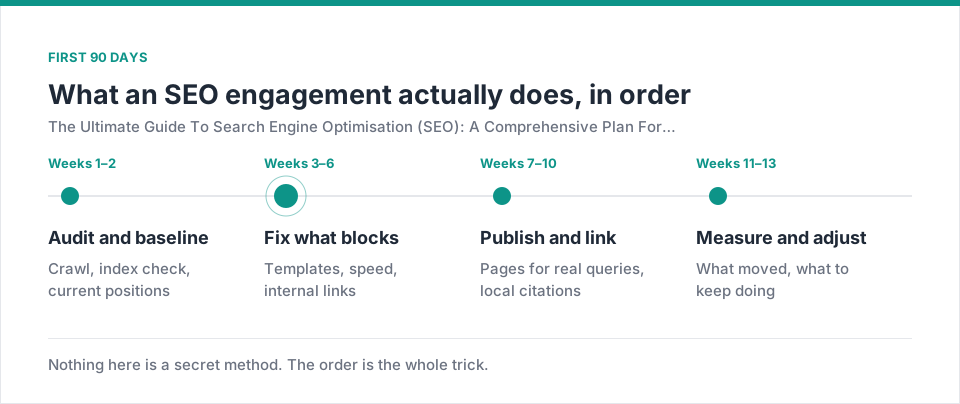
Internal linkage remains a supporting act to external credibility. Pair outreach with a robust internal link strategy so that new backlinks reinforce your topical clusters and help readers discover related Glasgow content. For more on how we structure linkable assets within Glasgow campaigns, explore our SEO Services and check the Industry Insights for practical examples.
Outreach Process And Compliance
Successful link-building depends on a repeatable outreach process that blends personalisation with value. Start with a Glasgow-targeted prospect list, prioritising outlets and partners with demonstrated editorial standards. Craft outreach messages that offer a unique Glasgow angle or data-driven asset, rather than generic requests. Use a clean follow-up cadence and log responses to keep momentum and avoid overcommunication.
- Build a Glasgow-focused prospect list featuring credible regional media, associations, and relevant businesses.
- Personalise outreach with local context, data, and mutual value propositions.
- Offer high-quality assets such as case studies, local benchmarks, or guides that merit inclusion.
- Track responses, secure commitments, and maintain transparent disclosures for any sponsored or co-authored content.
- Regularly audit links to ensure continued relevance and health, using disavow processes if necessary.
Adopt a compliant, ethical posture at all times. This not only aligns with Google’s guidelines but also builds long-term trust with Glasgow’s audiences. For practical frameworks and templates, visit our SEO Services and the Industry Insights for real-case examples of ethical link-building in local campaigns.
In addition to outreach, keep an eye on evolving best practices around authority signals and content quality. While links are not the sole determinant of rankings, they are a meaningful signal of trust and relevance when earned transparently and maintained over time. GlasgowSEO.ai integrates link-building with content strategy, technical health, and local context to deliver durable visibility for Glasgow audiences.
Local SEO And Local Signals
In Glasgow’s competitive local search arena, local signals are not a separate tactic but a contextual layer that reinforces the broader SEO strategy. GlasgowSEO.ai frames local optimisation around three interlocking components: accurate business listings, highly relevant locally oriented content, and reputation signals from customer reviews. When these elements work in concert, you increase both visibility in local results and the likelihood of meaningful engagement from Glasgow readers and potential customers.
Consistency is the cornerstone. If a business appears under different addresses or phone numbers across directories, search engines receive conflicting cues about who you are and where you operate. A single source of truth for your NAP (Name, Address, Phone) details, tied to your primary schema and GBP activity, helps search engines understand your locality and sustains trust with users on mobile and desktop alike. Local reviews, meanwhile, provide social proof that reinforces credibility and improves click-through when Glasgow searchers see your business in maps, knowledge panels, and local packs.
Local Listings And NAP Consistency
Audit and harmonise your local presence across key directories, including Google, Bing, and relevant local or industry platforms. Create a data-cleaning workflow that identifies inconsistencies in spelling, street endings, and phone formats, then standardises them to a consistent format suitable for Glasgow’s context. Use a definitive Local Business schema across pages and ensure your address details align with GBP listings so that maps can corroborate the same physical location.
- Audit core NAP data across primary directories and internal records to identify discrepancies and gaps.
- Claim or claim again your Google Business Profile (GBP) and keep it updated with the latest service areas, hours, and attributes relevant to Glasgow.
- Apply consistent NAP data to your website, reflect it in LocalBusiness schema, and ensure alignment with external listings.
- Evaluate local citations from credible Glasgow-focused outlets and industry bodies to avoid duplications or conflicting signals.
- Monitor and resolve changes promptly, using a change-management process that logs updates and maintains data accuracy over time.
For technical grounding, LocalBusiness schema helps search engines interpret your locality and offerings. JSON-LD is recommended because it keeps structured data separate from page content and reduces rendering impact. See Google’s guidance on structured data for local business information to implement these signals reliably.
As you structure local data, remember that accuracy isn’t a one-off task. Regularly audit listings after updates to hours, locations, or services and align these updates with your GBP activity. GlasgowSEO.ai integrates these checks into repeatable workflows, so local signals stay aligned with broader SEO objectives rather than drifting out of sync over time.
Google Business Profile And Local Intent
GBP (formerly Google My Business) is a primary conduit for local visibility. Optimising GBP involves selecting precise categories, keeping your hours current, and ensuring that your location appears correctly on maps. Encouraging authentic reviews and actively responding to them demonstrates real-time engagement with Glasgow’s community and helps shape user perception before a click ever happens. Use GBP posts to highlight local events, promotions, or neighbourhood-focused content that resonates with Glasgow audiences.
Key practices include uploading high-quality photos, maintaining a complete profile, answering customer questions, and optimising the business description with Glasgow-specific language. These signals contribute to richer search results, including knowledge panels and the local pack, where users are often deciding where to engage further.
To support local discovery, pair GBP activity with well-structured on-page signals. Ensure location pages mirror GBP information, embed a robust LocalBusiness schema, and maintain consistent NAP across the site. For further guidance on how local signals reinforce broader SEO outcomes, consult the local-seo resources from leading authorities as well as Glasgow-focused case studies in our Industry Insights.
Local Content That Resonates
Content designed for Glasgow should address the city’s distinct neighbourhoods, industry clusters, and community events. Content that answers common local questions, showcases local case studies, and provides practical guidance for nearby readers tends to attract more clicks, longer engagement, and natural links from local publishers. Pillar content can be complemented by cluster pages that cover specific Glasgow topics, from service-area explanations to neighbourhood-specific considerations.
Develop content with a clear local orientation: neighbourhood guides, partner spotlights, and Glasgow-specific benchmarks. When possible, include data visuals or maps that align with local business needs. This not only improves user experience but also enhances the likelihood of local media referencing your content as a credible resource. Internal linking should reinforce the local content map, guiding readers from discovery to conversion through service pages, case studies, or contact opportunities.
For structure and quality guidance, rely on canonical resources such as Google’s SEO Starter Guide and structured data guidelines. See LocalBusiness schema references and related best practices to ensure your content and markup work together to improve local discoverability.
Reviews And Reputation Management
Reviews are powerful social proof in Glasgow’s local decision-making context. Encourage customers to share their experiences through ethical, unobtrusive requests and provide easy paths to leave feedback. Develop a formal approach to respond to reviews—thank positive contributors and address concerns publicly with helpful next steps. Managing reviews effectively helps build trust, improves local signals, and can influence click-through rates in the local results and maps panels.
- Implement a respectful, rule-based review solicitation process that complies with platform guidelines.
- Respond promptly to reviews, offering appreciation for positive feedback and concrete remedies for negative experiences.
- Monitor review signals across GBP and other major directories to identify trends and recurring issues.
- Document responses to demonstrate accountability and service-orientation to Glasgow readers.
- Escalate high-risk feedback through a formal process that prevents reputational damage while protecting customer privacy.
Beyond responses, leverage reviews within your content strategy. Case studies, service pages, and FAQ sections can reference validated outcomes cited by customers, boosting credibility and helping users compare options in Glasgow’s landscape. For credibility benchmarks and practical examples, explore the Glasgow SEO blog and related Industry Insights on our site.
Measuring Local SEO Performance
Local SEO success is measured through a blend of visibility metrics and conversion-oriented outcomes. Track local pack impressions, map views, direction requests, and phone calls alongside on-site metrics like time on page and form submissions from Glasgow visitors. A local-focused dashboard helps teams correlate GBP activity, local content interactions, and review sentiment with tangible business results. Regularly review performance against KPIs and adjust your content and listing strategy to reflect evolving Glasgow consumer needs.
For practical implementation, GlasgowSEO.ai provides repeatable workflows that start with a local listings audit, continue with content localisation, and finish with reputation management and performance reporting. See our SEO Services for how we integrate local signals into broader campaigns, and visit the Industry Insights for real-world Glasgow case studies and benchmarks.
Local signals are most powerful when they are accurate, timely, and visibly tied to user needs. With a disciplined, data-driven approach to listings, content, and reviews, Glasgow-based organisations can build a durable local presence that supports broader SEO goals and sustains growth in the city’s dynamic market.
Authoritative references underpin these recommendations. For local structured data and its impact on local visibility, refer to Google's LocalBusiness guidelines and schema documentation, along with trusted industry guidance from Moz on local SEO practice. Examples include LocalBusiness structured data and Moz Local SEO guidance.
Analytics, KPIs And Measurement
In Glasgow's local SEO landscape, measurement anchors decision-making. GlasgowSEO.ai emphasises a disciplined, evidence-based approach to tracking what matters, not what’s easy to track. This section outlines a practical framework for KPIs and dashboards that connect activities to business results in the Glasgow market.
Define a lightweight core KPI set first, then expand as campaigns mature. Start with four categories that reflect both online visibility and offline impact for Glasgow audiences.
Defining Core KPIs For Glasgow Local SEO
Visibility, engagement, conversions, and local signals form a pragmatic KPI quartet. Each category should have 2–3 specific metrics, with targets calibrated to your Glasgow market, industry sector, and campaign stage.
- Visibility: organic impression share, average ranking position for core Glasgow keywords, organic click-through rate (CTR).
- Engagement: time on page, pages per session, bounce rate for Glasgow landing pages.
- Conversions: form submissions, phone calls, direction requests, or booked consultations from Glasgow users.
- Local signals: GBP interactions, map views, and review sentiment trend within Glasgow.
These KPIs should be tracked at a page level for critical assets and aggregated into a campaign dashboard that covers Glasgow markets. GlasgowSEO.ai uses a combination of Google Analytics 4, Google Search Console, and GBP data to provide a complete picture, while safeguarding user privacy and data governance requirements.
Effective dashboards blend raw data with context. Add local context such as neighbourhoods, service areas, or event-driven spikes to explain fluctuations. This contextualisation helps stakeholders see not just the numbers but what actions they signal. See our SEO Services for how we translate measurement into action and Industry Insights for Glasgow-specific case examples.
Measurement Architecture And Dashboards
Design a measurement framework that sources data from three primary streams: technical health (Crawl, indexing, CWV), behavioural metrics (GA4), and business outcomes (CRM, GBP). A typical Glasgow-focused dashboard should include: a traffic/visibility module, a user experience module, a lead conversion module, and a local signals module. Build the dashboard to reflect both short-term wins and long-term growth in the Glasgow market.
Concrete steps include instrumenting events with meaningful names, using consistent UTM parameters for campaigns, and aligning data timeframes across sources to enable apples-to-apples comparisons. GlasgowSEO.ai provides a standard dashboard blueprint you can adapt, with templates that map to pages, clusters, and pillar content in your Glasgow content strategy. Explore our SEO Services and the Industry Insights for examples of dashboards in practice.
Key metrics to include in a Glasgow-specific dashboard include: qualified traffic from Glasgow, conversions per channel, GBP interactions by location, and content performance by topic cluster. Regularly review data quality, ensure attribution models reflect local customer journeys, and adjust targets as market conditions shift in Glasgow.
A/B Testing And Experimentation
To move from observation to improvement, run controlled experiments that isolate the impact of optimisations. In Glasgow campaigns, practical tests include testing headline variants for local service pages, adjusting CTAs tied to Glasgow-specific actions, and validating the impact of schema blocks on local search results. Prioritise tests with sufficient sample sizes and a realistic decision window, then track outcomes using your KPI framework.
Important design considerations include ensuring tests run in a statistically valid manner, using a clear hypothesis, and avoiding confounding changes. Document test results and share learnings with stakeholders to reinforce a culture of evidence-based decision making in Glasgow teams.
For practical guidance, GlasgowSEO.ai’s repeatable testing playbook outlines how to structure experiments and interpret results, with templates integrated into our editorial and technical workflows. See our SEO Services for a structured measurement plan and the Industry Insights for real-world examples of A/B tests in local campaigns.
Attribution And Local ROI
Attribution challenges are magnified in local markets where searchers touch multiple channels before converting. Use a pragmatic, multi-channel attribution approach that credits Glasgow-originated interactions across touchpoints, including assisted conversions, GBP interactions, and on-site engagements. Implement robust UTM tagging, call tracking, and CRM integration to capture the customer journey accurately.
Define what constitutes a meaningful ROI in Glasgow terms: cost per lead, revenue per customer, and long-term value from local accounts. Regularly re-evaluate attribution models as the Glasgow market matures and as new channels become significant for local buyers.
To support practical adoption, align measurement with governance policies and privacy considerations. Ensure data retention, access controls, and consent practices are fit for purpose in the UK environment. For reference, consult Google’s analytics resources and best practices on privacy and data usage, alongside industry standards from Moz or HubSpot on measurement strategy.
GlasgowSEO.ai helps teams translate analytics into action. Our repeatable workflows combine data collection, dashboarding, and targeted optimisations so that measurement becomes a driver of ongoing improvement in Glasgow’s competitive search landscape. Explore our SEO Services for implementation support and Industry Insights for practical examples and benchmarks from similar markets.
Common SEO Mistakes And Myths
Even with a solid local strategy like GlasgowSEO.ai, teams can stumble into familiar traps. This section highlights the pitfalls Glasgow-based organisations most commonly encounter, and provides practical remedies to keep campaigns on a steady, ethical path. By recognising these missteps early, teams can preserve momentum and ensure investments translate into measurable local impact.
First, avoid keyword over-optimisation. Stuffing pages with dense keyword repetitions signals spammy intent and often degrades readability. Instead, prioritise natural language that mirrors how Glasgow residents search and reason about services. Use core terms in context, integrate local modifiers where they add clarity, and ensure metadata accurately reflects page content. This approach aligns with Google’s guidance on content quality and user-centric optimisation. See Google’s SEO Starter Guide for the fundamentals of pairing intent with content quality.
Want the numbers behind this? The analytics guide shows how organic traffic and the queries GA4 hides are rebuilt in Semalt.
For practical remediation, audit metadata and body copy to identify spots where a term appears redundantly. Replace repetition with varied phrasing that captures the same idea. Maintain a clean content map that shows where each Glasgow term contributes to a user journey rather than playing to a keyword density target.
A related common error is conflating ranking signals with business outcomes. High keyword rankings are not a sufficient measure of success if they don’t translate into qualified traffic, engagement, and conversions. Local campaigns should connect rankings to meaningful actions, such as form submissions, phone calls, or appointment bookings, particularly from Glasgow users who have clear local intent.
To combat this, GlasgowSEO.ai recommends defining a set of local success metrics that go beyond page-one rankings. Align these metrics with business goals and track them in a shared dashboard. This builds accountability and demonstrates value to stakeholders, while keeping focus on results rather than score-chasing.
Content And Quality Myths
Another frequent pitfall is treating content generation as a volume game. Quantity does not compensate for a lack of depth, accuracy, or local relevance. In Glasgow, content that speaks to real neighbourhoods, industry clusters, and regional events tends to perform better and attract earned signals from local publications and readers.
Myth: more pages automatically mean better visibility. Reality: well-structured pillar pages with thoughtful clusters that address Glasgow-specific questions deliver more sustainable results than a bloated site. Focus on quality, relevance, and topical authority rather than sheer output. A practical way to do this is through pillar-and-cluster content maps that reflect local needs and pathways to conversion.
To build credible content, enforce editorial standards and incorporate real-world examples, data visuals, and local testimonials. Pair content strategy with robust on-page signals and structured data to help search engines interpret local intent with accuracy.
Another widespread myth is that technical health alone guarantees ranking. In truth, technical excellence must be paired with useful content and a credible, local signal ecosystem. Core Web Vitals, fast loading, secure connections, and reliable mobile experiences matter, but they must work in harmony with well-structured content and accurate local signals such as NAP data and GBP activity.
Practically, embed a ritual of technical audits alongside content audits. Regularly review canonicalisation, structured data, and local signals, ensuring they support the user journey in Glasgow as part of an integrated plan rather than as separate tasks.
Link Building And Local Signals Misconceptions
Many teams fall into the trap of chasing large numbers of links without assessing relevance or editorial context. Ethical link-building for Glasgow should prioritise local relevance, credible sources, and reader value. A backlink from a Glasgow industry publication or a regional association carries far more weight than an irrelevant authority link that has little connection to local needs.
To correct this, implement a disciplined, evidence-based outreach process. Evaluate prospective links for topical alignment, editorial quality, and audience relevance. Maintain a transparent documentation trail to capture domain authority, context, and expected impact. This ensures link-building supports topical clusters and reinforces local signals without enabling manipulative practices.
Finally, avoid conflating GBP optimisation with sole local visibility. GBP is a powerful lever, but it should complement, not replace, on-page signals, local content, and technical health. Pair GBP optimisations with pillar content, structured data, and robust internal linking to create a cohesive local presence in Glasgow’s search ecosystem.
Practical Fixes You Can Apply Now
- Audit content for local relevance and prune or improve pages that lack Glasgow-specific value. Prioritise pages with direct local intent and high potential conversion.
- Institute a content brief process that embeds Glasgow context, audience intent, and measurable outcomes into every asset.
- Standardise local data across NAP, GBP, and schema to avoid inconsistent signals that confuse search engines and users.
- Adopt an ethical, data-driven link-building workflow with a clear outreach log, quality checkpoints, and disavow management if needed.
- Establish a measurement framework that ties visibility and engagement to conversions and GBP activity, using a shared dashboard for stakeholders.
For structured guidance, refer to Google’s SEO Starter Guide and Quality Guidelines, and consider supplementary insights from Moz and HubSpot to benchmark best practices in UK markets. See Moz: Moz: Beginner's Guide To SEO and HubSpot: SEO myths debunked.
Glasgow-based teams can explore our SEO Services for practical implementations and repeatable workflows, and stay informed with the Industry Insights for case studies that showcase local success.
Future Trends in SEO: AI, Automation and Privacy
The SEO landscape is evolving rapidly as advances in artificial intelligence (AI), automation, and privacy expectations shape how Glasgow-focused teams plan, execute, and measure campaigns. GlasgowSEO.ai stresses a balanced, evidence-based approach: leverage AI for insight and efficiency, apply automation to scale repeatable processes, and uphold privacy and trust as core design principles. This section outlines practical trajectories and how to embed them into your local optimisation workflow without sacrificing quality or compliance.
AI-Driven Insight And Semantic Understanding
AI is increasingly central to understanding search intent beyond keyword matching. Modern semantic models interpret user questions, topics, and contextual signals to forecast what a Glasgow user is trying to achieve. For local campaigns, this means content briefs and topic maps that anticipate questions tied to neighbourhoods, services, and events. AI can surface latent clusters, identify gaps in local coverage, and suggest structural content enhancements that improve topical authority while preserving human editorial direction.
In practice, use AI as a complementary tool rather than a replacement for expertise. Start with human-approved seeds for topic modelling, then let AI propose clusters, internal link structures, and optimization ideas that are validated by your team. This combination preserves E-E-A-T while accelerating discovery and prioritisation for Glasgow audiences.
For credible benchmarks, align AI-assisted recommendations with established sources such as Google’s guidance on content quality and structure. See Google’s SEO Starter Guide for an evidence-based baseline, and review structured data best practices to help AI-driven insights translate into machine-understandable signals on the Glasgow site. Google’s SEO Starter Guide.
Automation Of Repetitive SEO Workflows
Automation accelerates consistency across audits, briefs, and reporting. Glasgow-based teams can deploy AI-assisted keyword clustering, content briefs, and metadata templating, then apply automated checks to ensure alignment with local intent. Routine tasks such as site audits, canonical corrections, and schema validation can be automated, freeing editors to focus on strategy, nuance, and quality signals that differentiate Glasgow content in a crowded market.
Important cautions accompany automation: preserve human oversight for quality assurance, maintain transparent versioning of changes, and ensure automation does not erode the readability or trust signals that users expect. Use automation to handle high-velocity, low-risk tasks while reserving critical editorial decisions for local experts and clients.
Operationalise automation through repeatable playbooks. GlasgowSEO.ai provides templates that map a content plan to a production calendar, quality checks, and performance dashboards. See our SEO Services page for how we structure these workflows and integrate them with local campaigns, and explore Industry Insights for practical examples of automation in action. SEO Services and Industry Insights.
Privacy By Design And Data Governance
As data collection and personalised signals expand, privacy and governance must be embedded in every campaign. Local campaigns benefit from clear data minimisation, transparent consent practices, and strict controls on how user data is collected, stored, and used for optimisation. UK regulations and best practices emphasise consumer trust, which in turn supports engagement and conversion quality. Integrate privacy checks into every stage—from keyword research to content personalisation and analytics reporting.
Practical steps include auditing data collection points, validating consent for analytics and personalised experiences, and ensuring that data sharing with third-party tools adheres to local requirements. Document data handling policies, maintain access controls, and implement data retention schedules aligned with governance standards. When AI or automation processes involve user data, establish guardian processes to manage risk and ensure compliance across the Glasgow campaign lifecycle.
- Define data collection and processing boundaries for local campaigns, with clear opt-ins and disclosures.
- Implement role-based access and review data flows to minimise exposure and risk.
- Regularly review consent mechanisms, data retention, and third-party integrations for compliance and transparency.
For reference, consult Google’s quality guidelines and the SEO Starter Guide to ensure that AI-driven content and structured data remain aligned with search-engine best practices, while privacy considerations stay front and centre. Google’s SEO Starter Guide.
Close alignment between AI capability, automated workflows, and privacy governance creates a sustainable, trustworthy foundation for Glasgow campaigns. This combination supports durable visibility while protecting user trust and meeting evolving regulatory expectations.
To explore how these trends translate into real-world results, browse GlasgowSEO.ai’s SEO Services for practical implementations and the Industry Insights for case studies and benchmarks in UK markets.
SEO Checklist And Optimised Workflow
In Glasgow’s fast-moving local search environment, a pragmatic, repeatable checklist and workflow are essential to sustain momentum and deliver measurable outcomes. This final section distils the preceding guidance into a practical, team-ready framework that aligns content, technical health, and local signals with clear governance and robust measurement. GlasgowSEO.ai provides repeatable templates and playbooks that integrate with our SEO Services and the Industry Insights library to help you operationalise these principles at scale.
A Practical, Repeatable Checklist
- Conduct Baseline Audit And Discovery to establish current performance, gaps, and local opportunities for Glasgow audiences.
- Align Stakeholders And Define Local Objectives to ensure all teams work toward the same measurable outcomes in Glasgow.
- Define KPIs And Measurement Architecture that tie online signals to local business results and enable clear reporting.
- Create Content Brief Templates And Topic Maps to standardise production and maintain local relevance across campaigns.
- Build A Technical Health Quick-Win Plan that targets crawlability, indexing, and stability for core Glasgow content.
- Develop An On-Page Optimisation Playbook with local metadata, clear headings, semantic structure, and robust internal linking.
- Establish Local Signals Management that coordinates GBP activity, local content, NAP consistency, and reputation signals such as reviews.
- Plan Ethical Link-Building And Off-Page Activities tailored to Glasgow’s ecosystem to secure credible and topical backlinks.
- Set An Implementation Cadence And Change Management process to roll out updates in controlled sprints with measurable impact.
- Design A Shared Dashboard For Reporting, Governance And Continuous Improvement that brings together visibility, engagement, conversions, and local signals.
These steps are deliberately compact yet comprehensive, enabling teams to move from insight to action with minimal friction. For ongoing support, GlasgowSEO.ai’s repeatable templates help you scale, while still allowing bespoke localisation for Glasgow’s distinct neighbourhoods, industries, and events. See our SEO Services for how we embed these templates within live campaigns, and browse Industry Insights for examples of how local optimisation drives results in real-world Glasgow projects.
Templates And Playbooks
At the heart of an efficient programme are uniform templates that capture best practices and reduce cycle times. A typical content brief, for example, specifies audience, intent, core questions, tone, word-count targets, and internal/external linking notes—each with a Glasgow-specific localisation lens. A separate technical brief outlines crawlability checks, structured data requirements, and performance thresholds aligned with CWV targets for Glasgow pages.
Internal playbooks organise activities by stage, from discovery through to production and measurement. These artefacts are designed to be revisited quarterly to reflect evolving Glasgow market conditions, new services, and regional partnerships. For practical examples of briefs and playbooks in action, explore our Industry Insights and sample templates within SEO Services.
Measurement, Dashboards And Governance
A robust measurement framework is essential to translate activity into business value. A Glasgow-centric dashboard should integrate data from technical health (crawl, index, CWV), engagement (GA4), and local outcomes (GBP interactions, form submissions, and offline conversions). Maintain a shared data language across teams to prevent misinterpretation and enable timely decision making.
Governance should cover version control for templates, change logs for updates, and review cadences that keep work aligned with Glasgow objectives. Regular audits of NAP consistency, GBP performance, and content relevance help prevent drift and preserve trust with local audiences. For grounding in best practices, consult Google’s SEO Starter Guide and Structured Data guidelines, alongside Moz Local SEO resources.
To reinforce accountability, establish a quarterly performance review that benchmarks against Glasgow KPIs, assesses the value delivered to local stakeholders, and updates the content map to address emerging needs. GlasgowSEO.ai provides templates and dashboards that map to pillar pages, topic clusters, and local assets, ensuring consistent measurement across campaigns.
Adoption, Training And Continuous Improvement
Adoption hinges on practical training and clear ownership. Run short, role-based training sessions that cover how to complete briefs, how to use templates, and how to interpret dashboards. Pair training with shadow campaigns and hands-on workshops that demonstrate real Glasgow-case scenarios, case studies, and measurable outcomes. Encourage a culture of continuous improvement by integrating learnings into the next planning cycle and updating playbooks accordingly.
For ongoing guidance, leverage our Glasgow-specific case studies in the Industry Insights and ensure every team member understands how local signals interlock with technical health and content strategy. Our framework is designed to be a living system, adapting as Glasgow’s search landscape evolves.
Key references include Google’s guidance on content quality and structured data, Moz’s local SEO framework, and HubSpot’s practical resources on SEO myths and best practices. See Google’s SEO Starter Guide, Moz: Beginner's Guide To SEO, and HubSpot: SEO myths debunked for broader context that complements Glasgow-specific strategies.
To summarise, a well-constructed SEO checklist and optimised workflow empower Glasgow teams to act decisively, scale efficiently, and demonstrate value with clarity. The result is durable visibility, stronger local authority, and a measurable impact on Glasgow businesses and organisations. If you’d like practical support to implement these principles, start with our SEO Services and keep exploring industry-leading benchmarks in the Industry Insights.