Introduction To Local SEO In Glasgow
Glasgow is a city of distinct districts, busy high streets, and a growth-minded business community. Local search in Glasgow isn’t just about appearing in a map pack; it’s about translating the city’s geography into intent that turns online searches into real-world visits. For Glasgow-based businesses, a focused local SEO strategy—delivered by specialists who understand Scotland’s consumer habits, regulatory expectations, and the city’s unique suburbs—can produce durable visibility on Google surfaces, including Google Business Profile (GBP), Maps, and organic search. A partner like GlasgowSEO.ai brings that local authority together with practical governance, credible content, and auditable signal journeys that scale from Anderston to the West End, from Merchant City to the Southside.
This Part 1 sets the foundation for a multi-part journey. It explains what local SEO is in the Glasgow context, why it matters for local acquisition, and how a purposeful, governance-forward approach can deliver measurable momentum across GBP health, Maps proximity, and organic visibility. The focus remains practical: how Glasgow businesses surface when customers are looking for services within neighbourhoods, districts, and nearby towns across the Clyde corridor.
What Local SEO Means For Glasgow
Local SEO is the discipline of making a business visible to people in specific places. In Glasgow, signals such asGBP completeness, Maps proximity, NAP (Name, Address, Phone) consistency, authentic reviews, and locally relevant content cooperate to surface your business when nearby customers search for the services you offer. It’s about aligning online signals with Glasgow’s city blocks, districts, and street-level realities so that a searcher’s questions—"Where is the best plumber near Glasgow City Centre?" or "Which cafe opens early in the West End?"—are answered with relevance, speed, and trust. GlasgowSEO.ai specialises in turning geography into intention, so your messages match where and when Glaswegians search.
Beyond rankings, the objective is auditable momentum: signals that can be traced from a Glasgow suburb page to a city-wide pillar topic and then to GBP, Maps, and organic results. The governance spine helps ensure every action has provenance, every page belongs to a clear topic, and every customer touchpoint reinforces trust across surfaces.
Glasgow’s Local Search Landscape
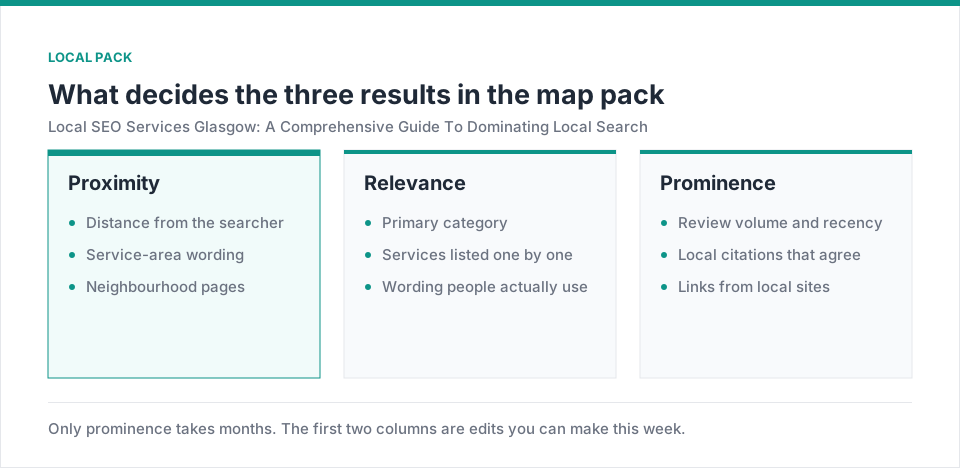
The Glasgow market features a dense mix of fast-moving retail streets, service clusters, and a thriving small-business ecosystem. Google’s Local Pack remains a critical gateway; ensuring accurate business information, hours, categories, and reviews translates directly into more clicks, calls, and store visits from the city’s diverse neighbourhoods. Mobile search dominates, with users often seeking nearby trades, hospitality, health services, and professional offerings while on the move. A Glasgow-focused local SEO programme emphasises GBP health, Maps proximity, and high-quality local pages that mirror Glasgow’s real-world geography—districts like the West End, Hillhead, Partick, Govanhill, and beyond.
To compete effectively, Glasgow businesses must maintain NAP consistency, collect and respond to reviews in a timely, locale-aware manner, and publish content that speaks to the city’s landmarks, events, and local industries. A sustained approach is not about chasing short-term vanity metrics but building credible signals that endure as platform algorithms evolve.
A Simple, Governance-Forward Way To Start
Think of a Glasgow local SEO programme as a hub-and-spoke framework where a city pillar anchors content, district clusters feed with MTN-aligned blocks, and service pages (CPT identities) stabilise the offerings you present to customers. A governance backbone helps tie every activity to clear provenance, making it possible to replay decisions for audits, performance reviews, and regulatory transparency. This Part 1 emphasises setting up the scaffolding: define the Glasgow city pillar, identify key districts to target first, establish reliable NAP management, and create a recognisable content spine that speaks to Glasgow’s different communities.
What You Can Learn In This Series
The 14-part journey will progressively illuminate how to structure Glasgow content around core topics, align GBP and Maps readiness with a scalable content spine, and implement auditable signal journeys that regulators can replay. Expect practical checklists for onboarding, hub-and-spoke planning, local citations, reviews strategy, and measurement that ties activity to real business outcomes in Glasgow. The aim is to give Glasgow-based teams a trustworthy playbook that works with GlasgowSEO.ai and aligns with best practices from recognised authorities such as Google’s guidance and established SEO resources.
- Discovery And Baseline: How to map suburb clusters to pillar topics and service identities to avoid semantic drift.
- Content Spine Development: Building hub-and-spoke assets that reflect Glasgow’s geography and community needs.
- GBP And Maps Readiness: Practical actions to complete profiles, gather reviews, and move Maps proximity forward.
- Measurement And Governance: A framework to audit signal journeys and demonstrate ROI over time.
The Local Search Landscape In Glasgow
Glasgow’s local search ecosystem is shaped by a dense mix of districts, vibrant high streets, and a busy service economy. Local SEO in Glasgow goes beyond a map pack; it translates the city’s geography into intent, turning searches into store visits, phone calls, and reservations. A governance-forward approach, driven by Translation Provenance (TP), Master Topic Nodes (MTN), Canon Seeds (CPT), and Attestation Maps (AMI), ensures every action has provenance and every signal travels in a verifiable, auditable path. This Part 2 sets the stage for how Glasgow-focused programmes surface in GBP, Maps, and organic results, and why near-me visibility hinges on a disciplined, suburb-aware content spine anchored to the city’s real-world geography—from Anderston to the Southside, from the West End to Govanhill.
Glasgow’s Local Search Landscape
The Glasgow market features a rich tapestry of neighbourhoods, each with its own service clusters and consumer habits. Google’s Local Pack remains a critical gateway; accuracy of NAP (Name, Address, Phone), business categories, hours, and review velocity directly translate into calls, clicks, and visits. Mobile search is dominant among Glaswegians seeking trades, hospitality, health services, and professional offerings while on the move. A Glasgow-focused local SEO programme prioritises GBP health, Maps proximity, and high‑quality local pages that reflect Glasgow’s blocks and districts—think West End, Partick, Govanhill, Southside, and beyond. A robust governance spine ensures that every district page anchors a city pillar, maintaining semantic cohesion as the footprint grows.
The aim isn’t only higher rankings; it’s durable momentum evidenced by auditable signal journeys that can be traced from a local suburb page to a city-wide pillar topic and on to GBP, Maps, and organic surfaces. This governance‑forward approach binds TP locale notes to translations, MTN anchors to topical coherence, CPT identities to stable services, and AMI trails to end-to-end signal journeys that regulators can replay. Glasgow’s complexity benefits from a hub‑and‑spoke model where districts feed into core pillars, keeping the city voice authentic while enabling scalable growth.
Near-Me Visibility And The Glasgow Consumer
Glasgow customers typically research locally and compare several providers within a district before choosing. This pattern makes GBP health and Maps proximity especially impactful. The most successful Glasgow packages align local landing pages with district clusters, ensuring that each suburb page both answers local queries and reinforces the city-wide authority. Local reviews, accurate hours, authentic photos, and locally relevant posts contribute to trust and click-throughs, particularly for service sectors such as trades, healthcare, and hospitality that rely on quick, local decision-making.
Key signals include: consistent NAP across major directories, real-time response to reviews in locale, and a content spine that mirrors Glasgow’s geography and culture. A well-governed local programme will move beyond vanity metrics and deliver auditable progress: suburb pages feeding pillar topics, pillar topics powering GBP updates and Maps entries, and organic content reinforcing the city’s authority.
A Simple, Governance-Forward Glasgow Model
View Glasgow’s local SEO as a hub-and-spoke network where a Glasgow city pillar anchors content, district clusters feed MTN-aligned blocks, and service pages (CPT identities) stabilise offerings presented to customers. A governance backbone links every action to provenance, enabling audits, performance reviews, and regulator-friendly replay. Start with a clear city pillar, identify initial districts to target, stabilise NAP management, and create a recognisable content spine that speaks to Glasgow’s communities.
The Part 2 focus is to outline practical progression: define the Glasgow pillar, map key districts to MTN topics, establish reliable NAP governance, and craft a content spine that mirrors Glasgow’s geography and local industries. This structure supports auditable journeys from suburb clusters to pillar topics and onward to GBP and Maps results.
What Readers Will Take From This Part
Expect a practical introduction to Glasgow‑specific hub-and-spoke planning, GBP and Maps readiness, and a governance framework that makes signal journeys auditable. This section also previews how Part 3 will translate Glasgow’s core local SEO elements into tangible on-page and technical actions, all bound to TP, MTN, CPT, and AMI signals for regulator replay across GBP, Maps, and organic results.
Next Steps: Getting Started With A Glasgow Package
To explore Glasgow‑focused governance and delivery, review our Glasgow-focused offerings at Glasgow SEO services to understand deliverables, milestones, and governance expectations. Standard resources such as Google’s SEO Starter Guide and Moz’s Beginner’s Guide to SEO provide universal guidance that can be mapped to Glasgow’s local nuance through TP notes and MTN anchors. If you’re ready to begin, initiate an intake with GlasgowSEO.ai to align TP, MTN, CPT, and AMI with your district footprint and service catalog. A phased onboarding approach, paired with auditable dashboards, will unify GBP health, Maps proximity, and organic performance across Glasgow’s suburbs and communities.
The roadmap for Part 2 sets the stage for subsequent parts: tiered Glasgow packages, hub-and-spoke deployment, measurement governance, and regulator-ready artifacts that incrementally scale across the city’s neighbourhoods.
Core Local SEO Elements You Need In Glasgow
Glasgow’s local search landscape rewards precision, locality, and credibility. A governance-forward approach binds Translation Provenance (TP), Master Topic Nodes (MTN), Canon Seeds (CPT), and Attestation Maps (AMI) to every major action, ensuring signals surface consistently on Google Business Profile (GBP), Maps, and organic results across the city’s districts from the West End to Govanhill. This Part outlines the core elements you must implement to build durable visibility for Glasgow-based customers and to support regulator-ready signal journeys as algorithms evolve.
Beyond chasing rankings, the objective is auditable momentum: suburb pages feeding city pillars, pillar topics powering GBP updates and Maps proximity, and high-quality local content that reinforces EEAT signals for Glaswegians and visitors alike. The Glasgow-only framework helps ensure every action has provenance, every page serves a clear topic, and every customer touchpoint earns trust across surfaces.
1) Google Business Profile Readiness For Glasgow
Claiming and optimising GBP is the fastest route to near-me visibility in Glasgow. Begin with a complete GBP listing for your business, ensuring Name, Address, and Phone (NAP) are consistent with your Glasgow footprint. Choose the primary Glasgow category that best reflects your core offerings and add secondary categories that capture nearby services common to the city’s neighbourhoods. Keep hours accurate, especially around local events or holiday periods that affect district-level footfall.
Regular GBP posts that highlight Glasgow-specific events, partnerships, and service updates help you stay relevant in Maps and local searches. Upload authentic, high-quality photos of your premises, team, and neighbourhoods to illustrate local credibility. The Q&A section is a valuable surface for preemptive guidance—populate it with Glasgow-relevant questions and clear, helpful answers.
To maintain auditability, tie every GBP action to MTN pillars and CPT services, and attach AMI trails to major GBP changes so regulators can replay how updates contributed to proximity and trust across Glasgow surfaces. For ongoing governance, review GBP health alongside suburb-cluster performance in your regular dashboards.
2) Local Keyword Strategy And Content Spine For Glasgow
Build a city pillar that represents Glasgow’s local authority in search—examples include Glasgow Local SEO Authority or Glasgow Local Business Optimisation. Suburbs act as clusters feeding MTN-aligned blocks and CPT service pages, with TP locale notes guiding translations to preserve local intent. Pair this with a content spine that mirrors Glasgow’s geography—districts such as the West End, Partick, Maryhill, and Govanhill—while maintaining semantic cohesion across the pillar topics.
Target geo-phrases that reflect Glaswegian intent, such as “plumber near Glasgow City Centre,” “coffee shop open early in the West End,” or “emergency locksmith Glasgow” and map them to CPT services. Use a clear H2/H3 structure where H2 holds pillar topics, H3 holds suburb clusters, and H4 houses CPT pages. Local language variants captured in TP notes ensure translations respect Glasgow’s linguistic nuances across communities.
Internal linking should guide readers from suburb pages to pillar topics and then to CPT service pages, forming auditable signal journeys that propagate to GBP updates, Maps proximity, and organic results. A disciplined keyword cadence supports EEAT by aligning expertise, authority, and trust signals with Glasgow’s local needs.
3) Local Citations, EEAT, And Authority In Glasgow
Quality local citations anchor trust in Glasgow’s search ecosystem. Build and maintain consistent NAP data across key Glasgow directories, ensuring alignment with your suburb pages and pillar topics. Each citation should link to a suburb or pillar topic and be complemented by author bios or case studies that strengthen EEAT signals. AMI trails bind citations to end-to-end signal journeys, so regulators can replay how a citation contributed to GBP credibility, Maps proximity, and organic visibility.
Consistency is critical. Align citations with MTN pillars so every Glasgow cluster reinforces a singular city-wide narrative. This coherence protects semantic integrity as you scale across suburbs, languages, and services. Incorporate Glasgow landmarks or community partnerships in citations where appropriate to deepen local relevance.
4) Reviews, Reputation, And Local Proofs In Glasgow
Reviews remain a decisive signal for Glaswegians choosing trades, hospitality, healthcare, and professional services. Develop a proactive reviews strategy that prompts customers to share feedback after tangible Glasgow-specific experiences. Respond promptly to all reviews in a locale-aware voice, referencing nearby districts or landmarks when appropriate to show genuine engagement.
Link reviews to MTN pillars and CPT services so that sentiment reinforces the same city-wide narrative. Publish local proofs such as case studies, credible author bios, and community involvement stories that support EEAT. Attach AMI trails to show how testimonial signals influence GBP credibility, Maps proximity, and organic rankings, enabling regulator replay across Glasgow’s surfaces.
5) Schema, Local Data, And EEAT For Glasgow
Schema markup should mirror Glasgow’s local architecture. Apply LocalBusiness or Organization schemas to city pillars and suburb pages, with MTN-aligned FAQ blocks to address common Glasgow queries. CPT service identities anchor the services you offer, while TP locale notes preserve translation fidelity across Glasgow’s multilingual communities. EEAT is strengthened through credible author bios, local case studies, and community proofs tied to MTN pillars, with AMI trails documenting end-to-end signal journeys for regulator replay across GBP, Maps, and organic results.
Consider LocalBusiness, FAQPage, and Service schema blocks that reflect your hub-and-spoke content structure. Use MTN anchors to maintain topical coherence as you expand to new Glasgow districts, ensuring a scalable, regulator-friendly data layer that search engines can easily interpret.
6) On-Page Optimisation And Internal Linking For Glasgow
On-page signals should mirror the hub-and-spoke spine. Local landing pages and CPT service pages must be optimised with geo-targeted terms in titles, meta descriptions, headers, and body content. Bind TP locale notes to translations, preserve Glasgow vernacular, and ensure internal links flow logically from suburb pages to pillar topics to CPT services. Implement LocalBusiness schema and MTN-aligned FAQ blocks to support local intent and EEAT, and deepen AMI trails to capture how on-page actions influence GBP, Maps, and organic results.
- Localized title tags: Include the target Glasgow suburb or district with the city pillar in the title for clarity and relevance.
- Descriptive meta descriptions: Write concise, locality-focused descriptions that answer user intent without keyword stuffing.
- Headings and content structure: Use a clean H1 for the pillar, H2 for pillar topics, H3 for suburb clusters, and H4 for CPT pages to guide readers and search engines.
- Schema integration: Deploy LocalBusiness, Service, and FAQ structured data aligned with MTN and CPT signals to improve local rich results.
7) Measurement, Governance, And Reporting For Glasgow
Measurement should demonstrate auditable momentum across GBP health, Maps proximity, and organic visibility. Attach TP, MTN, CPT, and AMI to major actions and track KPI momentum at the suburb level. WhatIf planning helps anticipate platform updates and market shifts, while AMI trails enable regulator replay across Glasgow surfaces. Typical KPIs include proximity and visibility by suburb, GBP completeness, Maps near-me interactions, pillar-topic rankings, and conversions tied to CPT services.
Optimising Your Google Business Profile For Glasgow Audiences
Google Business Profile (GBP) remains the quickest route to near-me visibility for Glasgow-based customers. A governance-forward local SEO programme binds Translation Provenance (TP), Master Topic Nodes (MTN), Canon Seeds (CPT), and Attestation Maps (AMI) to every GBP action so signals are traceable, reproducible, and regulator-friendly. This Part 4 focuses on practical steps to claim, optimise, and maintain a GBP presence that resonates with Glaswegians across districts from the West End to the Southside, and from Merchant City to Anderston.
GBP Readiness For Glasgow
GBP readiness begins with a complete, verified listing that mirrors your Glasgow footprint. Ensure the business name, address, and phone number (NAP) align exactly with your site and GBP profile, down to the street and postal code. Select the most accurate primary category that maps to your core Glasgow service, with relevant secondary categories to capture adjacent needs across districts such as the West End, Partick, Govanhill, and the Merchant City.
Hours must reflect local reality, including district-level variations during events, holidays, or seasonal shifts. Activate attributes that Glaswegians commonly use, such as wheelchair accessibility, outdoor seating, delivery options, and payment methods that are prevalent in your area. Upload high-quality photos showing the storefront, interior ambience, team, and neighbourhood context to reinforce trust with local searchers.
GBP posts should highlight Glasgow-specific news, partnerships, seasonal offers, and district-level events to keep the profile fresh and relevant. Encourage authentic local reviews and implement a structured approach to respond promptly, using locale-aware language that references nearby districts or landmarks where appropriate to demonstrate genuine engagement.
Binding GBP Actions To The Glasgow Content Spine
Each GBP element should be anchored to the overarching Glasgow hub-and-spoke model. Tie GBP posts and updates to MTN pillars (for example, Local Services, Hospitality, Trades) and to CPT service identities (your concrete offerings). Attach AMI trails to key GBP changes so regulators can replay how near-me visibility evolved as district content expanded and new suburb clusters came online.
Within the Glasgow plan, ensure every district page reinforces a city pillar, maintaining semantic cohesion as you scale from Anderston to the East End, and from Hillhead to Govanhill. This alignment helps GBP, Maps, and organic results reinforce a single, credible local narrative rather than a collection of isolated signals.
Local Signals That Move Maps Proximity And Organic Results
Currency in Glasgow’s GBP health comes from completeness, accurate categories, up-to-date hours, robust photo sets, and timely responses to reviews. When district pages are optimised to reflect Glasgow’s blocks and landmarks, they reinforce proximity signals that show up in Maps searches for near-me queries such as “plumber near Glasgow City Centre” or “cafe open late in the West End.
Another critical signal is review velocity. A steady stream of authentic, locale-relevant reviews strengthens EEAT (expertise, authoritativeness, trustworthiness) signals for Glaswegians and visiting travellers. Make it a governance priority to monitor sentiment, respond with pace, and capture local proofs such as neighbourhood partnerships or community events that legitimize your Glasgow presence. Attach MTN pillars to the review narrative so feedback reinforces the city-wide authority rather than a single storefront claim.
Structured Data And Local Proofs For Glasgow GBP
Apply LocalBusiness or Organisation schema on GBP-related pages and ensure MTN-aligned FAQ blocks address Glasgow-specific questions about districts, services, and neighbourhood considerations. CPT service identities anchor what you offer, while TP locale notes maintain translation fidelity across Glasgow’s multilingual communities. AMI trails document end-to-end signal journeys so regulators can replay how GBP updates affected proximity, trust, and surface visibility.
In addition to the standard GBP schema, embed local context in your content spine by mapping suburb pages to pillar topics and CPT services. This creates a coherent signal flow that remains robust as algorithms evolve and helps sustain EEAT across Glasgow’s diverse populations.
Measuring GBP Impact In Glasgow
When evaluating GBP performance, track proximity and visibility by district, GBP completeness, and the rate at which Maps near-me interactions translate into visits, calls, or bookings. Measure how district pages feed pillar topics and how GBP updates contribute to Maps proximity and organic rankings. Use WhatIf planning to anticipate platform changes and ensure your Glasgow signal journeys remain auditable over time.
A practical governance cadence combines quarterly GBP health reviews, monthly Maps proximity dashboards, and ongoing analysis of pillar-topic visibility in organic results. Tie these outputs to MTN anchors and CPT services to preserve topical coherence and maintain EEAT signals as your Glasgow footprint expands.
Next Steps: Actionable Glasgow GBP Optimisation
To advance, review our Glasgow-focused Glasgow SEO services page to understand deliverables, milestones, and governance expectations. For universal guidance, leverage Google’s SEO Starter Guide and Moz’s Beginner’s Guide to SEO, then map these best practices to Glasgow-specific TP notes and MTN anchors. If you’re ready to start, initiate an intake with GlasgowSEO.ai to align TP, MTN, CPT, and AMI with your district footprint and service catalog. A phased onboarding approach will help you achieve GBP health, Maps proximity, and sustainable organic visibility across Glasgow’s neighbourhoods.
On-Page Local Optimisation For Glasgow Customers
This part delves into practical, Glasgow-specific on-page techniques that align with the governance-forward framework GlasgowSEO.ai champions. By tightly coupling on-page signals with the hub-and-spoke content spine, Translation Provenance (TP), Master Topic Nodes (MTN), Canon Seeds (CPT), and Attestation Maps (AMI), Glasgow-based businesses can surface more reliably for local queries across Google Business Profile (GBP), Maps, and organic search. The objective is to translate Glasgow’s neighbourhood reality into precise search signals that are easy to audit and scale across districts like the West End, Partick, Govanhill, and beyond.
A Cohesive On-Page Framework For Glasgow
Begin with a clear city pillar that represents Glasgow’s local authority in search results. Suburbs and districts then feed MTN-aligned blocks and CPT service pages, ensuring the page hierarchy mirrors the city’s geography. TP locale notes guide translations to respect Glasgow’s linguistic nuances, while AMI trails document how on-page actions travel from suburb pages to pillar topics and into GBP, Maps, and organic rankings. This approach prevents semantic drift as your Glasgow footprint expands from Anderston to the Southside.
On-page optimisation should demonstrate a tight signal flow: the city pillar anchors the topic, district pages elaborate with local specificity, and service pages present the concrete offerings Glaswegians expect. The result is a readable, locally resonant experience that search engines recognise as a single, credible Glasgow authority rather than a collection of isolated pages.
Local Keyword Strategy Aligned To Glasgow Districts
Develop geo-targeted keyword sets that map naturally to Glasgow’s districts. For example, keyword themes might include “plumber near Glasgow City Centre,” “cafés open early in the West End,” or “emergency locksmith Glasgow.” Tie these terms to MTN pillars and CPT services so each district page reinforces a city-wide narrative. Place geo-variants in titles, headers, and the first 100–150 words to make intent immediately visible, while keeping the overall voice authentic to Glaswegian readers.
Read next: SEO Glasgow: dominating local search · Local SEO Glasgow: the map pack
Internal links should guide readers from suburb pages to pillar topics and then to CPT service pages, creating auditable signal journeys that regulators can replay. This connectivity supports EEAT by showing expertise and relevance across Glasgow’s diverse communities.
Schema And Local Data That Strengthen Glasgow Signals
Apply LocalBusiness or Organization schemas to city pillars and suburb pages, with MTN-aligned FAQ blocks that answer common Glasgow questions about districts, services, and local needs. CPT service identities anchor the offerings, while TP locale notes preserve translations. EEAT is reinforced through credible author bios, local case studies, and community proofs tied to MTN pillars. AMI trails map end-to-end signal journeys, enabling regulator replay across GBP, Maps, and organic results.
Ensure schema is consistently deployed across the hub-and-spoke structure, so search engines can understand the relationships between Glasgow’s districts and the core services you provide.
Internal Linking And Content Hygiene In Glasgow
Establish a deliberate internal linking strategy that moves readers from suburb pages to pillar topics and then to CPT pages. This enables a smooth user journey and a clear signal pathway for search engines, reinforcing the governance framework. Keep language consistent with TP notes, and ensure MTN anchors are visible in navigation and contextual sections. Regularly audit for duplicate content and semantic drift as you expand into new Glasgow districts.
Localization fidelity matters. Use Glasgow-specific terminology and landmarks within content where appropriate to deepen local relevance and improve EEAT signals for Glaswegians and visitors alike.
Measurement, Governance, And Regulator-Ready Reporting
Measurement should tie on-page actions to governance outcomes. Attach TP, MTN, CPT, and AMI to major on-page changes and monitor KPI momentum across GBP health, Maps proximity, and organic visibility at the suburb level. WhatIf planning helps anticipate platform updates or market shifts, ensuring signal journeys remain auditable. Key indicators include proximity and visibility by suburb, pillar-topic rankings, and conversions tied to CPT services.
Governance should deliver auditable dashboards that show how suburb pages feed pillar topics and drive GBP and Maps signals. Regular reviews and regulator-ready artifacts increase confidence in ongoing improvements and provide a clear audit trail for stakeholders.
Next Steps: Implementing Glasgow-Focused On-Page Optimisation
To operationalise these on-page practices, start with a Glasgow-focused intake on glasgowseo.ai. We will anchor TP, MTN, CPT, and AMI to your major actions from day one and craft auditable signal journeys across GBP, Maps, and organic results. For reference, review Google’s SEO Starter Guide and Moz’s Beginner’s Guide to SEO to align universal standards with Glasgow’s local nuance. If you’re ready to begin, contact GlasgowSEO.ai and we’ll tailor an on-page plan to your district footprint and service catalogue. A phased onboarding approach supports sustained growth across Glasgow’s neighbourhoods.
Building Local Citations And Directory Listings In Glasgow
Local citations and directory listings remain foundational signals for Glasgow-based businesses seeking reliable near-me visibility. When the Name, Address, and Phone (NAP) are consistent across authoritative Glasgow directories and GBP connections, search engines gain confidence in the business’s local footprint. A governance-forward approach—binding Translation Provenance (TP), Master Topic Nodes (MTN), Canon Seeds (CPT), and Attestation Maps (AMI)—ensures each citation action is traceable, auditable, and scalable across Glasgow’s districts from the West End to the Southside. This Part 6 concentrates on building a robust citation framework that supports GBP health, Maps proximity, and durable organic visibility.
Why Local Citations Matter In Glasgow
Local citations anchor credibility within Glasgow’s competitive local ecosystem. When a business appears consistently across key directories—paired with a well-aligned GBP profile—the probability of appearing in near-me results increases. Citations act as external attestations of your physical presence and service scope, particularly in districts like Partick, Hillhead, and Govanhill where residents frequently verify local providers before engaging. A Glasgow-focused citation program advances the city-led content spine by reinforcing signal paths that culminate in GBP completeness, Maps proximity, and sustainable organic visibility.
Beyond sheer presence, high-quality citations contribute to EEAT (expertise, authoritativeness, trust) by tying local authority signals to district-level pages and CPT service identities. The governance framework ensures that every external mention has provenance within the MTN pillars, and each is auditable via AMI trails that regulators can replay. The outcome is a more resilient local signal footprint that withstands algorithm updates and market shifts in Glasgow.
Auditing Your Current Citations In Glasgow
Start with a comprehensive audit of existing citations to identify gaps and inconsistencies. Compile a master list of Glasgow-facing directories, maps listings, social profiles, and industry-specific platforms. Validate NAP, business name variants, category matching, and hours. Discrepancies should be flagged for immediate remediation to preserve signal integrity across GBP, Maps, and organic results. Attach TP locale notes to each entry to capture regional nuances in Glasgow dialect, street naming conventions, and district-specific terms.
Document the audit findings and bind them to MTN pillars so that improvements reinforce city-wide topics rather than creating isolated signals. Use AMI trails to map how each corrected entry affects GBP health, Maps visibility, and organic rankings over time.
Building A Glasgow-Centric Citation Programme
Adopt a district-aware, hub-and-spoke model for citations. Start with core Glasgow directories that carry strong local authority signals, then expand to district-focused listings that mirror MTN topics. Each citation should link to a suburb or pillar topic page and be supported by author bios or case studies that reinforce EEAT. Ensure CPT service identities are reflected where relevant so external mentions align with your on-site offerings. AMI trails should capture the impact of each new citation on GBP credibility, Maps proximity, and organic rankings, enabling regulator replay across Glasgow surfaces.
As you scale, prioritise quality over quantity. A handful of well-chosen, locally relevant directories can outperform a larger number of marginal listings. To maximise impact, integrate citations with your content spine so district pages feed pillar topics and CPT pages, creating auditable signal journeys from street-level referrals to city-wide authority.
Quality Versus Quantity: Choosing The Right Directories
When evaluating directories, apply a disciplined criterion set to avoid low-quality signals. Prioritise directories that are regionally credible, industry-relevant, and commonly used by Glasgow consumers. Confirm that each listing supports NAP consistency with your GBP and that the directory offers a profile with rich media fields (photos, hours, attributes). Avoid duplicate listings across platforms and monitor for changes that could dilute signal strength. The MTN framework ensures these signals remain coherent with your city pillar topics and CPT services, while AMI trails document their end-to-end influence on GBP, Maps, and organic results.
- Authority of source: Favor directories with established local or industry credibility within Glasgow.
- Contact data fidelity: Ensure precise, verifiable NAP alignment with GBP and your on-site content.
- Category alignment: Choose categories that accurately reflect core Glasgow offerings and neighborhood contexts.
- Media capabilities: Prefer listings that support photos, videos, and service attributes to boost engagement.
- Regulator-readiness: Ensure data handling and attribution support auditable signal journeys via AMI trails.
- Geo-awareness: Directory signals should map to Glasgow districts and landmarks to reinforce locality in queries.
Workflow, Governance, And Measurement
Integrate citations into your governance cadence by binding each listing action to TP locale notes, MTN pillar topics, CPT service identities, and AMI signal trails. Establish a routine audit schedule, with WhatIf planning to anticipate platform changes or directory policy shifts. Track KPI-led outcomes such as GBP completeness related to Glasgow towns, Maps proximity movements in target districts, and organic visibility gains tied to pillar topics and CPT offerings. A regulator-ready dashboard should present suburb-level data alongside city-wide signals, enabling replay of every citation decision in a controlled, auditable manner.
To keep momentum, align the citation work with your broader Glasgow content spine. Internal links from suburb pages to pillar topics to CPT pages should be reinforced by consistent NAP signals and district-specific citations. This approach creates a durable, auditable network of signals that enhances near-me visibility while preserving Glasgow’s authentic local voice.
Next Steps: Glasgow Citation Activation
If you’re ready to advance, review our Glasgow-focused Glasgow SEO services page to understand deliverables, milestones, and governance expectations. For universal benchmarking, consult Google’s SEO Starter Guide and Moz’s Beginner’s Guide to SEO, then tailor the insights to Glasgow-specific TP notes and MTN anchors. A phased onboarding plan with auditable dashboards and AMI trails will help you achieve GBP health, Maps proximity, and sustainable organic visibility across Glasgow’s districts.
To begin the regulator-ready journey, book an intake with GlasgowSEO.ai and let our team bind TP, MTN, CPT, and AMI to your district footprint and service catalogue. A well-structured, governance-forward approach will deliver auditable signal journeys across GBP, Maps, and organic results while preserving Glasgow’s local voice.
Reviews And Reputation Management In Glasgow
In Glasgow’s competitive local market, customer feedback is not merely social proof; it’s a strategic signal that shapes near-me visibility, trust, and conversions across GBP, Maps, and organic results. A governance-forward Glasgow SEO programme binds Translation Provenance (TP), Master Topic Nodes (MTN), Canon Seeds (CPT), and Attestation Maps (AMI) to every review-related action. This Part 7 offers practical, auditable approaches to generating, monitoring, and leveraging reviews to strengthen local authority and EEAT signals while preserving Glasgow’s authentic voice across districts from the West End to Govanhill.
Why Reviews Matter In Glasgow
Glasgow customers frequently balance price, proximity, and reputation before deciding. A steady drumbeat of authentic, locale-aware reviews helps translate Glasgow’s real-world credibility into online trust. When reviews reference local landmarks, districts, or events, search engines recognise the signals as highly relevant to nearby searches. A Glasgow-focused programme weaves review activity into the city’s pillar topics and service identities, ensuring that sentiment reinforces a coherent, city-wide narrative rather than isolated storefront claims. AMI trails enable regulator replay of how testimonial signals contributed to GBP credibility, Maps proximity, and organic rankings across Glasgow’s diverse communities.
Beyond volume, the quality and locality of reviews drive EEAT. Thoughtful responses from a genuine Glasgow voice, backed by local proofs such as case studies and community involvement, strengthen perceived expertise, authority, and trust—especially for trades, hospitality, health, and professional services that Glaswegians rely on daily.
Strategies To Generate Reviews In Glasgow
Adopt a location-aware, permission-respecting approach that aligns with TP, MTN, CPT, and AMI. Start by requesting feedback at the conclusion of a tangible Glasgow service touchpoint, such as a district-specific job, project handover, or an in-store visit in a known Glasgow neighbourhood. Use prompts that reference nearby districts like the West End, Partick, or Maryhill to anchor the review in local context while keeping the language natural and unforced.
Encourage reviews across multiple surfaces (GBP, Google Maps, and your own testimonials hub) to diversify signal sources. Tie reviews to MTN pillars and CPT services so the narrative remains city-wide and coherent as you scale to additional districts. Attach AMI trails to major reviews so regulators can replay how feedback influenced proximity, trust, and organic visibility across Glasgow surfaces.
Managing And Responding To Reviews
Timeliness and tone are crucial. Respond to every review with pace and locale-aware language, referencing nearby districts or landmarks when appropriate. Acknowledge issues openly, outline concrete actions taken, and invite the reviewer to return. Responses should scale with MTN pillars, ensuring the Glasgow narrative remains consistent across all touchpoints. Attach AMI trails to demonstrate how your replies feed GBP credibility and Maps proximity, enabling regulator replay of customer sentiment’s impact on local signals.
Develop a standard response framework: acknowledge, action, and closure. Train team members to tailor replies to distinct Glasgow contexts—West End residents may value accessibility details, while Govanhill patrons might prioritise community involvement and local partnerships. Regularly audit sentiment trends by district to identify recurring themes and opportunities for proactive content updates that reinforce EEAT.
Leveraging Reviews As Local Proofs
Reviews are a gateway to stronger EEAT signals when paired with authentic local proofs. Publish credible author bios tied to MTN pillars, showcase local case studies, and feature community involvement stories that corroborate your Glasgow presence. Attach AMI trails to testimonials so regulators can replay how positive feedback translated into GBP credibility, Maps proximity, and organic rankings. The combination of reviews and proofs creates a robust local authority that Glaswegians recognise and search engines reward.
Consider a dedicated testimonials hub that aggregates reviews by district and pillar topic, with internal links guiding users from suburb pages to pillar content and CPT services. This structure supports a clear signal journey, aligning user-generated signals with the city-wide content spine and strengthening overall trust across GBP, Maps, and organic surfaces.
Schema, Local Data, And Reviews
Structured data should annotate reviews with the LocalBusiness or Organisation schema, paired with MTN-aligned FAQ blocks that answer Glasgow-specific questions about districts and services. Local proofs, including case studies and author bios, reinforce EEAT when linked to MTN pillars. Ensure AMI trails capture end-to-end signal journeys from review activity through GBP and Maps results, enabling regulator replay across all Glasgow surfaces.
Keep schema updates aligned with TP locale notes to preserve translation fidelity across Glasgow’s multilingual communities. Regularly review the quality of reviews and the relevance of responses to maintain a credible, locality-focused presence that endures algorithm changes.
Measuring Reputation Impact In Glasgow
Monitor sentiment trends by district, review velocity, and rating trajectories to quantify reputation effects on GBP health, Maps proximity, and organic rankings. Use WhatIf planning to anticipate shifts in consumer feedback or platform policies and to preserve auditable signal journeys. Tie outcomes to MTN pillars and CPT services so improvements reinforce a city-wide narrative rather than isolated signals. Quarterly dashboards should merge review metrics with pillar-topic visibility and local proofs to illustrate how reputation drives tangible Glasgow outcomes.
Measuring Success: ROI, KPIs, And Reporting For Glasgow Local SEO
Locally focused SEO in Glasgow delivers value that goes beyond search rankings. A governance-forward approach binds Translation Provenance (TP), Master Topic Nodes (MTN), Canon Seeds (CPT), and Attestation Maps (AMI) to every action, producing auditable signal journeys across Google Business Profile (GBP), Maps proximity, and organic results. This Part 8 translates those concepts into a practical framework for defining return on investment, selecting meaningful KPIs, and reporting in a way that stakeholders can understand and regulators can replay. The aim is to show how Glasgow-specific signals translate into tangible business outcomes—footfall, inquiries, conversions, and long-term authority—without sacrificing governance or transparency.
Defining ROI In A Glasgow Context
Return on investment for Glasgow Local SEO is a blend of incremental revenue from near-me searches, improved efficiency in customer acquisition, and the heightened certainty that comes from auditable signals. When TP locale notes are tied to MTN topic anchors, CPT service identities stabilise offerings, and AMI trails document end-to-end journeys, every pound spent becomes traceable to GBP health, Maps proximity, and organic visibility. A practical ROI framework separates short-term wins (GBP health improvements and quicker Maps presence) from long-term value (topical authority, EEAT, and suburb-level dominance).
To operationalise ROI, define both input measures (investment, personnel time, tooling) and output signals (proximity, clicks, calls, form submissions, store visits). Map each outcome to a district or pillar topic, then aggregate to city-wide indicators. This approach yields a clear narrative for executives and a regulator-ready audit trail showing how local activity drives Glasgow-wide impact.
KPIs Categories For Glasgow Campaigns
Organise KPIs into four coherent domains that connect activity to outcomes across GBP, Maps, and organic results. Each domain ties back to TP, MTN, CPT, and AMI, ensuring signals remain traceable and regulator-friendly.
- Proximity And Visibility: Suburb-level GBP health, Maps near-me presence, and pillar-topic visibility indicating local search impact.
- Traffic And Engagement: Organic visits, page depth, dwell time, and engagement metrics on pillar pages and suburb clusters, reflecting relevance and reader interest.
- Conversions And Revenue Impact: Inquiries, quotes, form submissions, and store visits attributable to suburb pages and CPT assets, with multi-touch attribution across surfaces.
- EEAT And Local Trust: Local proofs, credible author bios, and community narratives anchored to MTN pillars, mapped to AMI trails to enable regulator replay.
Dashboard Architecture And Reporting Cadence
Design dashboards that fuse GBP health, Maps proximity, and organic visibility with TP, MTN, CPT, and AMI provenance. A Glasgow-focused governance cadence integrates weekly operational checks, monthly dashboards, and quarterly governance reviews, each anchored to auditable artifact packs. The dashboards should present suburb-level insights alongside city-wide summaries, enabling fast decision-making and regulator-friendly replay of signal journeys.
- GBP Health: Profile completeness, accurate categories, hours, posts, photos, and reviews, bound to relevant TP notes for locale fidelity.
- Maps Proximity: Proximity movements, district-level signal strength, and routing interactions linked to MTN pillars and CPT services.
- Organic Visibility: Pillar-topic rankings at the suburb level, engagement metrics, and traffic to CPT pages.
- AMI Auditability: End-to-end signal journeys with replay-ready provenance, enabling regulators to trace the impact of actions across surfaces.
WhatIf Planning And Regulator Replay
WhatIf analyses are a core part of Glasgow governance. They help anticipate platform updates, policy shifts, or market dynamics without breaking signal journeys. Each WhatIf scenario should be bound to TP locale notes, MTN anchors, CPT service identities, and AMI trails so regulators can replay decisions and validate outcomes across GBP, Maps, and organic results. The practice reduces uncertainty and supports a proactive, transparent approach to local optimisation.
In parallel, establish a regulator-ready data archive that stores per-action provenance, including who approved changes, when updates were deployed, and how metrics evolved post-activation. This archive becomes the backbone of auditability across Glasgow’s local ecosystems.
90-Day Onboarding Blueprint For Glasgow
- Phase 1 – Discovery And Baseline (Days 1–15): Stakeholder interviews, GBP health checks, NAP audit, and suburb-to-pillar mappings with TP notes; attach AMI trails to baseline actions for regulator replay.
- Phase 2 – Pillar Spine And Suburb Clusters (Days 16–35): Finalise the Glasgow pillar, confirm MTN mappings for key suburbs, lock CPT identities, and begin anchor content blocks linking suburbs to pillars.
- Phase 3 – Content Spine Activation (Days 36–60): Publish hub-and-spoke content, implement internal linking, and deploy LocalBusiness schema aligned to MTN and CPT; initialise AMI trails for major actions.
- Phase 4 – Governance Cadence And Regulator Readiness (Days 61–90): Establish dashboards that fuse GBP, Maps, and organic signals with TP/MTN/CPT/AMI provenance; complete artefacts, WhatIf planning, and a formal handover plan for ongoing governance.
Building Local, Glasgow-Relevant Content
Content that speaks the language of Glasgow’s streets, landmarks, and industries compounds the authority created by robust GBP, Maps, and on-page signals. A governance-forward approach binds Translation Provenance (TP), Master Topic Nodes (MTN), Canon Seeds (CPT), and Attestation Maps (AMI) to every content decision. This Part 9 translates the strategy into practical ideas for Glasgow-specific content that strengthens topical authority, improves local intent alignment, and sustains regulator-ready signal journeys as your footprint grows from Anderston to the East End, and from the Merchant City to Govanhill.
Glasgow-Relevant Content Foundations
Start with a city pillar that embodies Glasgow’s local authority in search, then build suburb clusters that feed MTN-aligned blocks. Each cluster should map to CPT service identities, ensuring content reflects the city’s real-world geography and service expectations. TP locale notes preserve Glasgow’s linguistic nuances, so translations stay authentic across communities—from the West End’s historic terraces to the Southside’s vibrant eateries.
The aim isn’t generic local content; it’s a cohesive content spine where suburb pages feed pillar topics and CPT pages, creating auditable signal journeys that regulators can replay. Under this framework, every article, guide, and resource serves a clear Glasgow purpose and ties back to the city’s distinctive identity.
Content Formats That Work In Glasgow
Utilise a mix of formats that resonate with Glaswegians and visitors alike. Local guides, district spotlights, and industry showcases provide substantive, highly relevant content. Hub-and-spoke content can take the form of city pillar articles, with district and CPT pages acting as spokes that reinforce specific service lines. FAQ blocks answer Glasgow-specific questions about districts, landmarks, and local services, all anchored to MTN pillars and CPT identities.
Feature-rich content preserves EEAT signals: include author bios with ties to local projects, case studies from Glasgow customers, and community involvement notes that bolster trust. Remember to attach AMI trails to key content actions so regulators can replay how content contributions drove GBP and Maps momentum in Glasgow.
Topic Ideas By Glasgow District
Develop content clusters that mirror Glasgow’s geography and economy. Examples include:
- West End Heritage And Modern Life: guides to iconic streets, cafes, and the University precinct, tying local services to historic landmarks.
- Merchant City Business And Events: profiles of local shops, venues, and seasonal happenings that drive footfall and online engagement.
- Govanhill And Southside Community Profiles: content that highlights community initiatives, multilingual services, and local partnerships.
- Districts And Service Pages: MTN-aligned blocks for trades, hospitality, healthcare, and professional services reflective of Glasgow demand.
Content Formats In Practice
Practical examples include:
- Local Guides: comprehensive city guides that pair districts with service categories (e.g., “Plumbers In Glasgow West End” or “Cafés Open Early In Partick”).
- Neighbourhood Spotlights: quarterly features on a chosen district with resident perspectives, local proofs, and CPT-aligned services.
- Event-Centric Content: pages that map Glasgow events to nearby businesses and services, reinforcing proximity signals during peak times.
- Industry Profiles: sector-focused content (trades, health, hospitality) that showcases CPT services tied to MTN pillars and local case studies.
All formats should align with MTN anchors, TP locale notes, and AMI signal trails so each piece contributes to auditable journeys from suburb pages to pillar topics and onwards to GBP and Maps results.
Editorial Governance And Content Lifecycle
Adopt a structured content calendar that links every piece back to Glasgow’s pillar topics. Use MTN to ensure topical coherence, CPT to stabilise service offerings, TP to preserve locale nuance, and AMI to document how publication affects signal journeys. Regular audits should verify that content remains locally relevant, up-to-date, and compliant with EEAT standards as algorithms evolve.
Integrate content production with the broader Glasgow SEO programme by coordinating with GBP health, Maps proximity, and organic rankings dashboards. A regulator-ready workflow ensures a transparent, auditable trail from idea generation to publish and update cycles.
Measuring Content Impact In Glasgow
In addition to general SEO metrics, track district-level engagement, depth of topic coverage, and the performance of CPT service pages within suburb clusters. Monitor how content supports GBP updates and Maps proximity, and how evergreen content sustains organic visibility across Glasgow districts. Use AMI trails to enable regulator replay of how content decisions influenced surface signals over time.
Next Steps: Start Building Glasgow-Relevant Content
Ready to translate Glasgow identity into a durable content programme? Visit our Glasgow SEO services page to explore deliverables, milestones, and governance expectations. For universal best practices, reference Google’s SEO Starter Guide and Moz’s Beginner’s Guide to SEO, then tailor these to Glasgow-specific TP notes and MTN anchors. If you’re ready to begin, start a regulator-ready intake with GlasgowSEO.ai to bind TP, MTN, CPT, and AMI to your district footprint and service catalogue.
Multi-Location And Surrounding Areas Strategy
Expanding Glasgow-focused local SEO beyond the city centre requires a disciplined approach that treats surrounding towns and districts as an integral part of the Glasgow signal ecosystem. A governance-forward framework binds Translation Provenance (TP), Master Topic Nodes (MTN), Canon Seeds (CPT), and Attestation Maps (AMI) to every action, ensuring signals travel in auditable, regulator-ready journeys across Google Business Profile (GBP), Maps, and organic results. This Part 10 outlines how to manage multiple locations, establish parent pages, and create cross-linking that preserves topical cohesion while driving near-me visibility across Glasgow and its environs.
Why A Multi-Location Strategy Matters For Glasgow
Glasgow’s appeal extends beyond the city boundary into neighbouring districts and commuter towns. Local searches often begin with a broader geographic intent, such as a district within the Glasgow catchment or a nearby town that complements the city’s services. A multi-location strategy ensures you surface accurately for these adjacent queries, while keeping a unified Glasgow voice through MTN anchors, CPT service identities, TP localisation, and AMI trails that allow regulator replay. The goal is to avoid semantic drift as the footprint grows, so readers and search engines recognise a single, credible Glasgow authority rather than a collection of siloed entries.
Strategy Framework: Parent Pages, Suburb Clusters, And Cross-Linking
Begin with a Glasgow city pillar page that acts as the central hub. Create surrounding parent pages for broad geographic zones that logically map to MTN topics—for example, Glasgow North, Glasgow South, and Glasgow East clusters. Each location cluster feeds MTN-aligned blocks and CPT service pages that represent local offerings. Cross-linking should glide readers from suburb pages to their respective location parent pages, then to pillar topics, and finally to CPT services. By preserving a clear hierarchy, you maintain topical authority as you scale while enabling regulator replay of signal journeys through AMI trails.
Content Spine Design For A Multi-Location Glasgow Programme
The content spine must reflect geography in a scalable way. The Glasgow city pillar remains the anchor; each suburb cluster provides MTN-aligned blocks that feed CPT service pages. TP locale notes guide translations to preserve the local voice across dialects and communities, while AMI trails document end-to-end signal journeys from a district-level page to the city pillar and onward to GBP, Maps, and organic results. This structure makes it straightforward to expand into towns like East Dunbartonshire or Renfrewshire without compromising semantic integrity.
Maps Proximity, GBP Health, And Cross-Location Signals
Each location cluster should have dedicated GBP updates, local posts, and accurate NAP that ties back to the regional hub. Proximity signals must reflect the real-world geography: readers searching for a service in a Glasgow suburb should see nearby clusters powered by the central pillar topic. Review velocity, local proofs, and district-specific content all contribute to EEAT signals that strengthen authority across GBP, Maps, and organic surfaces. AMI trails enable regulators to replay how a district page activity contributes to city-wide momentum.
Measurement, Governance, And Reporting For A Multi-Location Glasgow Programme
Measurement should extend to district-level KPIs while maintaining an overarching Glasgow narrative. Bind TP locale notes, MTN anchors, CPT identities, and AMI trails to key actions. Track proximity and visibility by location, GBP completeness, Maps proximity movements, and pillar-topic rankings—then connect those signals to CPT-based conversions. WhatIf planning remains essential to anticipate platform updates and market shifts, ensuring the multi-location signal journeys stay auditable and regulator-friendly across all Glasgow surfaces.
Onboarding, Rollout, And Cross-Location Cadence
Adopt a phased rollout that begins with Glasgow city and a few high-potential surrounding areas, then expands to additional clusters. Define a governance cadence that includes regular WhatIf analyses, auditable dashboards, and a clear handover to internal teams as the footprint grows. Ensure each phase binds to TP, MTN, CPT, and AMI so all signals remain traceable and consistent with the Glasgow brand across locations.
Next Steps: How To Start The Multi-Location Glasgow Programme
If you’re ready to extend Glasgow’s local SEO health to surrounding areas, visit our Glasgow SEO services page to review deliverables, milestones, and governance expectations. For universal guidance, reference Google’s SEO Starter Guide and Moz’s Beginner’s Guide to SEO, then tailor insights to your Glasgow footprint using TP notes and MTN anchors. Initiate an intake with GlasgowSEO.ai to bind TP, MTN, CPT, and AMI to your district footprint and service catalogue, enabling auditable signal journeys across GBP, Maps, and organic results as you scale.
Ethics, Guidelines, And Future-Proofing For A Glasgow Local SEO Company
Grounding a Glasgow local SEO programme in robust ethics and forward-looking governance creates a durable, regulator-ready foundation. By binding Translation Provenance (TP), Master Topic Nodes (MTN), Canon Seeds (CPT), and Attestation Maps (AMI) to every action, a Glasgow-based agency can surface credible, localised signals across GBP, Maps, and organic results while preserving Glaswegian character and privacy by design. This Part 11 translates governance maturity into practical steps that sustain trust, transparency, and long-term value for businesses operating from the City Centre to the South Side and beyond.
Key ethical principles for Glasgow SEO providers
- White-hat and user-first optimisation: Prioritise transparent, durable gains that enhance user experience and align with search guidelines, rather than short-lived tricks that risk penalties or mistrust.
- Privacy and data minimisation: Embed privacy-by-design practices, minimise data collection, and clearly articulate data usage in governance artefacts bound to TP, MTN, CPT, and AMI.
- Transparency in reporting and attribution: Deliver plain-language dashboards that map actions to outcomes and provide audit trails for regulator replay.
- Avoidance of manipulative tactics: Refrain from cloaking, doorway pages, or backlink schemes that compromise EEAT and user trust.
- Localization integrity: Preserve the local voice in translations and ensure TP notes capture Glasgow dialects and neighbourhood nuances.
- Regulatory alignment: Adhere to consumer protection standards and platform policies while delivering verifiable cross-surface momentum.
Compliance with search engine guidelines and EEAT in Glasgow
- Authority signals: Build credible author bios and locally sourced case studies linked to MTN pillars to strengthen trust signals across Glasgow audiences.
- Content integrity: Ensure original, local-first content with transparent attribution and verifiability, avoiding duplicate or filler material.
- Schema and localization: Apply MTN-aligned schema blocks and LocalBusiness schemas to preserve semantic clarity while reflecting Glasgow's service reality.
- Regulator-ready artefacts: Maintain versioned TP/MTN/CPT/AMI artefacts that enable clear replay of actions and outcomes.
Governance, auditing, and regulator-ready artefacts
Governance is the operating system that keeps a Glasgow programme trustworthy as it scales. Bind every major action to TP locale notes, MTN anchors, CPT identities, and AMI trails so regulators can replay the journey from suburb pages to pillar topics and from GBP updates to Maps proximity. WhatIf planning becomes a standard practice to pre-empt platform changes without breaking signal coherence, while an audit-first mindset ensures every decision has provenance.
Maintain a central archive of actions, responsible owners, and outcomes. Each artefact should be tagged to a Glasgow district or pillar topic so you can demonstrate a single, cohesive narrative rather than a patchwork of isolated signals.
Regulator-ready dashboards and WhatIf planning in Glasgow
Dashboards should fuse GBP health, Maps proximity, and organic visibility with TP/MTN/CPT/AMI provenance. WhatIf panels allow teams to simulate regulatory or algorithmic shifts and preserve replay consistency across Glasgow surfaces. A clear governance cadence, including quarterly reviews and milestone artefacts, reassures stakeholders that local signals remain auditable as the footprint expands from the West End to the East End, and from merchant districts to residential communities.
AI readiness and privacy controls in Glasgow
Prepare for AI-enabled search while protecting Glaswegians’ privacy. Integrate human oversight with AI-assisted content production to maintain TP locale fidelity and MTN topical coherence. Use AMI trails to document AI-driven actions and enable regulator replay without exposing personal data. Establish governance gates that ensure any automated enhancements pass through reviews by local subject-matter experts before publication.
Onboarding, partnerships, and continuity for Glasgow
Choose partners that demonstrate a track record of regulator-ready reporting, clear ownership, and accessible governance artefacts. A senior lead should own the engagement, with transparent escalation paths and documented handover plans to internal teams. The onboarding should progress in defined phases, binding TP, MTN, CPT, and AMI from day one and extending district coverage with auditable signal journeys as you scale.
What this means for your Glasgow programme
A mature Glasgow local SEO programme blends ethics, transparency, and future-proofing into every action. By anchoring signals to the TP/MTN/CPT/AMI framework, you gain auditable momentum across GBP, Maps, and organic results while maintaining Glasgow’s authentic local voice. For practical templates, governance artefacts, and phased onboarding, explore our Glasgow SEO services page. External references such as Google’s SEO Starter Guide can help align universal best practices with Glasgow-specific nuance.
Measuring Success: KPIs, Reports And ROI
In Glasgow’s local SEO ecosystem, measuring success means translating activity into meaningful business outcomes. A governance-forward approach binds Translation Provenance (TP), Master Topic Nodes (MTN), Canon Seeds (CPT), and Attestation Maps (AMI) to every action so results are auditable, shareable, and regulator-ready. This Part 12 translates strategy into a practical framework for defining ROI, selecting actionable KPIs, and reporting in a way that aligns with Glasgow-specific signals and the governance model used by GlasgowSEO.ai. The aim is to show how near-me visibility, trust signals, and district-level momentum translate into real footfall, inquiries, and revenue across GBP, Maps, and organic results.
1) Aligning Objectives With Glasgow KPIs
The first step is to translate business goals into measurable, auditable signals that can be traced from suburb pages to the city pillar content and onward to GBP, Maps, and organic results. In a Glasgow context, typical objectives include increasing nearby visits to real-world locations, boosting inquiry rates for district-serving services, and growing repeat engagement across high-street clusters such as the West End and Merchant City.
To achieve this, tie every major action to the TP/MTN/CPT/AMI framework. This creates a provenance trail that regulators can replay and ensures that ROI calculations reflect genuine, geo-aware impact rather than isolated optimisations. The governance spine also supports ongoing accountability, showing how a single district page contributes to city-wide authority over time.
2) KPI Categories For Glasgow Campaigns
Organise KPIs into four coherent domains that connect activity to outcomes across GBP, Maps, and organic results. Each domain binds to TP, MTN, CPT, and AMI so signals remain traceable and regulator-friendly.
- Proximity And Visibility: Suburb-level GBP health, Maps near-me presence, and pillar-topic visibility indicating local search impact.
- Traffic And Engagement: Organic visits, page depth, dwell time, and engagement metrics on pillar pages and suburb clusters, reflecting relevance and reader interest.
- Conversions And Revenue Impact: Inquiries, quotes, form submissions, and store visits attributable to suburb pages and CPT assets, with multi-touch attribution across surfaces.
- EEAT And Local Trust: Local proofs, credible author bios, and community narratives anchored to MTN pillars, mapped to AMI trails to enable regulator replay.
3) Dashboards And Reporting Cadence
Design dashboards that fuse GBP health, Maps proximity, and organic visibility with TP, MTN, CPT, and AMI provenance. Create a regular cadence that delivers clarity to stakeholders while preserving regulator replay. A practical reporting rhythm combines weekly operational checks, monthly performance snapshots, and quarterly governance reviews, each anchored to auditable artifact packs.
- GBP Health: Profile completeness, accurate categories, hours, posts, photos, and reviews, bound to relevant TP notes for locale fidelity.
- Maps Proximity: Proximity movements, district-level signal strength, and routing interactions linked to MTN pillars and CPT services.
- Organic Visibility: Pillar-topic rankings at the suburb level, engagement metrics, and traffic to CPT pages.
- AMI Auditability: End-to-end signal journeys with replay-ready provenance, enabling regulators to replay outcomes across surfaces.
4) WhatIf Planning And Regulator Replay
WhatIf analyses are a core instrument of Glasgow governance. They help anticipate platform changes, policy shifts, or market dynamics without breaking signal journeys. Each WhatIf scenario should be bound to TP locale notes, MTN anchors, CPT service identities, and AMI trails so regulators can replay how near-me visibility evolved as district content expanded. An organised WhatIf process reduces uncertainty and supports a transparent approach to local optimisation.
5) Governance Cadence And Onboarding Rhythm
As the Glasgow footprint grows, formalise a governance cadence that scales with auditable artefacts. Quarterly reviews, WhatIf drills, and regulator-ready dashboards should stay in lockstep with the hub-and-spoke content spine. A clear onboarding rhythm ensures new districts, MTN pillars, and CPT services integrate seamlessly, with AMI trails capturing the impact of each expansion on GBP, Maps, and organic results.
6) ROI Modelling And Forecasting For Local Glasgow Campaigns
ROI modelling translates KPI momentum into financial impact. Use what-if simulations to estimate potential increments in proximity, clicks, inquiries, and conversions for the Glasgow districts you target. Tie forecast outputs to MTN pillars and CPT services so revenue signals reinforce a city-wide narrative rather than isolated successes. By presenting ROI in terms of district lift, pillar health, and GBP/Maps momentum, you create a compelling business case for sustained investment.
Key forecasting inputs include footfall uplift in high-potential districts, average sale value per converted lead, seasonal event effects, and the velocity of review generation and responses. Present outcomes in auditable dashboards that show how suburb actions aggregate to city-wide ROI over 6, 12, and 18‑month horizons. The frameworks of TP, MTN, CPT, and AMI ensure every projection remains traceable and regulator-ready.
Next Steps: How To Implement This Measurement Framework
Ready to implement a Glasgow-specific measurement framework? Start with a regulator-ready intake on Glasgow SEO services to assess current assets, align KPIs with TP/MTN/CPT/AMI, and craft auditable signal journeys across GBP, Maps, and organic results. For universal benchmarking, consult Google’s SEO Starter Guide and Moz’s Beginner’s Guide to SEO, then translate these into Glasgow-specific governance artefacts. A phased, auditable onboarding plan will unlock durable near-me visibility and trusted local authority across Glasgow’s districts.
Choosing A Local SEO Partner In Glasgow
Selecting the right local SEO partner is a strategic decision for Glasgow businesses aiming to surface consistently across Google Business Profile (GBP), Maps, and organic results. A governance-forward partnership built around Translation Provenance (TP), Master Topic Nodes (MTN), Canon Seeds (CPT), and Attestation Maps (AMI) provides a transparent, auditable path from district-level signals to city-wide authority. This part outlines practical criteria to evaluate potential agencies and how to structure a Glasgow-focused onboarding that delivers regulator-ready signal journeys while preserving Glasgow’s distinctive voice.
1) Define Clear Objectives And Strategic Fit
Begin with clarity on what success looks like in Glasgow terms. Are you prioritising near-me visibility in specific districts, GBP completeness, Maps proximity, or sustained organic rankings across pillar topics? A capable partner will translate your business goals into TP and MTN-aligned objectives, then map these to CPT service identities and AMI trails so every action is provable and auditable.
Ask for a concise onboarding plan that shows how district-level pages will feed the city pillar, how MTN topics anchor content, and how CPT services map to your real offerings. The right partner will present a governance blueprint from day one that supports regulator replay and ongoing accountability.
2) Proven Glasgow And Local-Economy Experience
Experience matters. Prioritise agencies with demonstrable success in Glasgow or similarly complex, city‑scale markets. Look for case studies that show how district clusters fed pillar topics, how GBP health translated into near-me visibility, and how Maps proximity delivered tangible footfall or inquiries. Verify that the agency can explain, in plain language, how TP notes preserved local nuance across languages and dialects and how AMI trails supported regulator replay.
Ask for client references and measurable outcomes across GBP, Maps, and organic results. Request examples of multi-district rollouts, especially where the partner managed a hub-and-spoke content spine tied to CPT services within Glasgow’s varied communities.
3) Transparency, Reporting, And Access
Transparency is non-negotiable. Demand dashboards that clearly map TP, MTN, CPT, and AMI to GBP health, Maps proximity, and organic visibility. The partner should provide monthly performance reports with plain-language insights, not jargon. Require access to raw data snapshots, audit trails, and WhatIf scenarios so you can replay decisions and validate outcomes in regulatory reviews.
Clarify reporting cadence, responsible owners, data sources, and how changes are communicated. A regulator-ready engagement hinges on accessible governance artefacts that survive personnel changes and platform updates.
4) Governance Maturity And Onboarding Cadence
Ask prospective partners to articulate a mature governance model. This includes an onboarding plan, WhatIf planning, auditable artefacts, and a transition strategy that becomes your internal playbook after the engagement ends. The partner should outline the initial 30/60/90-day milestones, demonstrating quick wins (GBP health, basic district pages, initial CPT mappings) and longer-term spine activation (hub-and-spoke content, district clusters, and AMI-traced signal journeys).
Pay particular attention to how TP locale notes will be applied during onboarding to preserve Glasgow’s linguistic hues and district-specific language. The governance framework should be scalable to new districts without compromising coherence of the city pillar.
5) Collaboration Model, Ownership, And Continuing Value
Does the agency assign a dedicated account team with clear ownership and escalation paths? A strong Glasgow partner will integrate with your internal teams, provide ongoing training, and offer governance templates that you can reuse. Confirm how they will coordinate with GlasgowSEO.ai to ensure TP, MTN, CPT, and AMI remain central to all actions. The right partner becomes a long-term advisor, not a one-off project vendor.
Request for proposals should include a transparent pricing model, service-level agreements (SLAs), and a defined handover plan should you ever switch providers. The objective is a partnership that sustains momentum, preserves Glasgow’s voice, and delivers regulator-ready outputs from day one onward.
6) Practical Next Steps To Initiate A Glasgow-Focused Partnership
To begin, request a regulator-ready discovery with GlasgowSEO.ai and any shortlisted agency. Prepare a brief that outlines your district footprint, pillar priorities, CPT service catalog, and localization requirements. Compare responses against a consistent scoring rubric that weighs governance maturity, relevance to Glasgow districts, and demonstrated EEAT strength. A well-structured RFP or intake process helps you surface the best-fit partner for a scalable, auditable Glasgow Local SEO programme.
For ongoing guidance, review our Glasgow-focused Glasgow SEO services page to understand typical deliverables, milestones, and governance expectations. Supplement with universal best practices from Google’s SEO Starter Guide and Moz’s Beginner’s Guide to SEO to ensure a robust, regulator-ready foundation that translates to Glasgow-specific results.
Common Local SEO Pitfalls To Avoid In Glasgow
Despite careful planning, Glasgow businesses can stumble on common local search missteps that erode near‑me visibility, trust, and conversions. This final part highlights the pitfalls most teams encounter when scaling a governance‑forward Local SEO programme in Glasgow, and it provides practical remedies grounded in TP (Translation Provenance), MTN (Master Topic Nodes), CPT (Canon Seeds), and AMI (Attestation Maps). The goal is a robust, regulator‑ready signal journey that preserves Glasgow’s authentic local voice while delivering durable results across GBP, Maps, and organic surfaces.
Throughout this section, Glaswegian nuance is treated as an asset. The guidance aligns with our Glasgow‑specific framework on glasgowseo.ai, and it references universal best practices from sources such as Google’s SEO Starter Guide and industry authorities, tailored to the city’s districts from the West End to Govanhill. Use the recommended strategies to preempt pitfalls, audit signals, and maintain auditable progress as you expand across Glasgow’s neighbourhoods.
Pitfall 1: Inconsistent NAP And Fragmented Citations Across Glasgow
One of the most damaging mistakes is letting Name, Address, and Phone data diverge between GBP, local landing pages, and third‑party directories across Glasgow's districts. Inconsistent NAP creates confusion for search engines about which location is the authoritative one, weakening Maps proximity and GBP trust signals. A governance approach exposes this misalignment early by tying each citation to a MTN pillar and a CPT service, with AMI trails showing end‑to‑end signal flow to GBP and Maps results.
Remedies include a formal NAP governance policy, a master citation registry, and district‑level mappings that tie every listing to its corresponding suburb page and pillar topic. Maintain a single source of truth for every Glasgow location and update all touchpoints synchronously whenever an address or phone number changes.
Practical checks you can apply now: run a quarterly audit of GBP, major Glasgow directories, and your site NAP; confirm hours, categories, and district tags match across surfaces. For ongoing governance, bind NAP updates to AMI trails so regulators can replay how a correction affected GBP health and Maps proximity.
Pitfall 2: GBP Under‑ optimisation And Poor Proximity Signals
GBP is the door to near‑me visibility in Glasgow. A weak GBP profile, stale posts, poor photo assets, or missing district‑level updates undermine proximity signals and reduce click‑throughs. When GBP health stalls, district pages fail to feed the city pillar, and Maps proximity cannot translate into local footfall. A robust approach binds GBP activity to MTN pillars, CPT services, and AMI trails, ensuring every GBP action contributes to a regulator‑replayable signal journey.
Remedies include completed GBP profiles, accurate hours that reflect district realities, consistent categories, and proactive post publishing that showcases Glasgow events, partnerships, and district updates. Encourage authentic local reviews and respond promptly with locale‑aware language that references nearby districts or landmarks to strengthen EEAT across Glasgow surfaces.
Pitfall 3: Thin Or Duplicate Local Pages Diluting Signals
As the Glasgow footprint grows, teams sometimes create multiple pages that duplicate content or offer only minimal value for specific districts. Thin pages dilute topical authority and waste crawl budget, making it harder for search engines to determine relevant authorities for each Glasgow suburb. A hub‑and‑spoke governance model helps avoid semantic drift by ensuring suburb pages feed a central Glasgow pillar topic and CPT service identities.
Remedies include consolidating pages where appropriate, expanding suburb blocks with unique, district‑specific value (landmarks, partnerships, district news), and ensuring each page links logically to the city pillar and CPT assets. Maintain a strict content hygiene routine to prevent duplication and preserve EEAT signals across Glasgow’s districts.
Pitfall 4: Neglecting Mobile Experience And Page Speed In Glasgow
Local searches in Glasgow are predominantly mobile. Slow loading times, intrusive interstitials, or non‑responsive layouts frustrate users who are looking for urgent local services, from trades to healthcare. A performant, mobile‑first site supports rapid access to district pages, pillar topics, and CPT service details, which in turn strengthens EEAT and improves rankings across GBP, Maps, and organic surfaces.
Remedies include optimising Core Web Vitals, compressing images, ensuring responsive design, and keeping critical content above the fold. Regularly test mobile accessibility across Glasgow districts to ensure consistent UX and signal delivery.
Pitfall 5: Weak Reviews Management And Local Proofs
Reviews are a decisive signal for Glaswegians. A passive approach to reviews weakens EEAT signals and reduces the perceived authority of Glasgow pillar topics. Conversely, a proactive, locale‑aware reviews strategy that prompts feedback after district‑level interactions strengthens credibility and supports regulator replay when combined with local proofs such as case studies and community involvement stories.
Remedies include a systematic review solicitation process tied to district interactions, timely responses that reference nearby landmarks, and generation of local proofs that corroborate the Glasgow presence. Attach AMI trails to reviews to show how testimonial signals influence GBP credibility, Maps proximity, and organic rankings in Glasgow.
Pitfall 6: Inadequate Local Schema And Data Markup
Without robust LocalBusiness or Organisation schemas, LocalFAQ blocks, and MTN‑aligned context, search engines struggle to interpret Glasgow’s district relationships and service offerings. Missing schema weakens rich results, reduces visibility on GBP and Maps, and makes regulatory replay more difficult. A governance‑forward programme binds TP notes, MTN anchors, CPT identities, and AMI trails to every data point, ensuring a complete, machine‑readable map of Glasgow’s local ecosystem.
Remedies include implementing LocalBusiness or Organisation schema on pillar and suburb pages, MTN‑driven FAQ blocks for Glasgow queries, and schema that mirrors the hub‑and‑spoke structure. Regular schema audits help maintain continuity as districts expand.
Pitfall 7: Poor Internal Linking And Semantic Drift
Weak internal linking disrupts signal journeys from suburb pages to pillar topics and CPT service pages. In Glasgow, a well‑planned internal link structure is essential to maintain topical authority, reinforce EEAT, and ensure regulator replay works across GBP, Maps, and organic results. Without disciplined linking, readers and search engines miss the intended navigational path that ties district content to the city pillar.
Remedies include a clear navigation and contextual links that move readers from suburb pages to pillar topics and then to CPT services. Maintain consistent anchor text aligned with MTN and TP notes to preserve topical coherence as Glasgow’s footprint expands.
Pitfall 8: Failing To Adopt A Multi‑Location Governance Mindset
Glasgow’s reach extends beyond the city core into surrounding towns. Some plans stop at the city limits, missing cross‑location signals and parent‑page architecture that stabilises the entire Glasgow ecosystem. A multi‑location governance approach ties parent pages to district clusters, MTN topics, and CPT services while ensuring AMI trails capture cross‑location signal journeys for regulator replay.
Remedies include implementing a parent page strategy, cross‑location internal links, and a scalable content spine that remains coherent as new districts or nearby towns are added. Align WhatIf planning and dashboards across locations to maintain auditable momentum.
Pitfall 9: Policy and Privacy Gaps In Glasgow Campaigns
Rising scrutiny around data privacy and regulatory expectations makes privacy by design essential. Collecting excessive data, opaque consent processes, or inconsistent data handling can create risk for Glasgow campaigns. A governance framework binds TP, MTN, CPT, and AMI to every action, ensuring privacy considerations are baked into signal journeys and auditable artefacts.
Remedies include transparent data practices, minimised collection, clear usage notices, and regular privacy reviews as part of the onboarding and ongoing governance cadence. Align with regulatory expectations while preserving local trust across Glasgow districts.
Practical Checklists To Mitigate Pitfalls
To close the loop, use a concise Glasgow‑specific checklist that organisations can run quarterly or at project milestones. This keeps governance tangible and regulator‑friendly while maintaining day‑to‑day momentum across GBP, Maps, and organic surfaces. The checklist below anchors the practical steps we’ve outlined above.
- NAP And Citations: Verify Glasgow NAP across GBP and major directories; correct discrepancies; attach AMI trails to major changes.
- GBP Health And Proximity: Audit GBP completeness, district updates, and posts; align with MTN pillars and CPT services.
For Glasgow‑specific guidance and governance templates, consult our Glasgow‑focused Glasgow SEO services page. When in doubt, map each action to TP notes, MTN anchors, CPT identities, and AMI trails to ensure regulator‑ready signal journeys across GBP, Maps, and organic results.